.svg)


Planning a gap year is exciting. Planning a gap year budget? Perhaps slightly less so.
But working out how much money you'll need before you leave can make the difference between spending your trip constantly checking your bank balance and actually enjoying the experience.
Having helped students plan gap year trips for years, we've learnt that the biggest budgeting mistakes aren't usually caused by spending too much on lunch or choosing the occasional nicer hostel. They're caused by forgetting the big expenses altogether.
So, how much does a gap year cost? There's no single answer, but here's how we'd recommend working it out.
Your first step is to estimate what you'll need each week for the essentials: accommodation and food.
As a general starting point, we'd suggest the following:
South & Central America Around £200
Southeast Asia £150–£200
Africa Around £400
Australia £300–£400
These aren't hard-and-fast rules. Costa Rica, for example, can be considerably more expensive than some other parts of Central America, while your choice between hostel dorms and private rooms will make a big difference.
But they give you somewhere sensible to start.
This is the bit that's easily forgotten.
You haven't travelled all the way to Peru to get to Machu Picchu and decide you can't afford to visit it.
Likewise, if you're travelling through Costa Rica, chances are you'll want to try zip-lining, surfing or one of the country's incredible wildlife experiences. In Australia, perhaps it's the Great Barrier Reef, a surf course or a trip to the Whitsundays.
Research these before you go and create a separate experiences budget.
One of our favourite tricks is to start your gap year wish list early and ask family members to contribute towards experiences for Christmas or birthdays.
"£50 towards Machu Picchu" might not be quite as easy to wrap as a jumper, but you'll remember it for considerably longer.
Internal transport can take a surprisingly large chunk of a backpacking budget.
Think internal flights, long-distance buses, trains, ferries, airport transfers, taxis and Ubers.
And this is one area where we always tell our gappies:
Don't skimp on safety to save a few pounds.
If it's late, you're somewhere unfamiliar or the safer option is an Uber or reputable taxi rather than walking, take it. Equally, don't automatically choose an unreliable transport option simply because it's the cheapest.
Build safe transport into your budget from the beginning and you won't find yourself having to choose between your finances and your common sense.
Africa deserves a particular mention here. It's an extraordinary place to travel, but it's not always straightforward backpacking territory. Transport between destinations can be complicated, accommodation choices can be more limited and big-ticket experiences such as safaris can be expensive.
Travel health is another cost students often forget.
What you need will depend on where you're going, how long you're travelling and what you'll be doing, so get professional travel health advice well before departure. Some travel vaccinations are available free through the NHS, while others need to be paid for privately and a course can run into hundreds of pounds.
Don't leave this until the last minute either. Some vaccinations require multiple doses over several weeks, so start investigating what you'll need early.
Please don't simply Google "cheap backpacker insurance" and click on the first deal.
Travel insurance is only a bargain if it covers you when you actually need it.
Check carefully:
The UK government specifically advises travellers to buy appropriate insurance as soon as a trip is booked and to make sure it covers their itinerary, planned activities and potential emergency costs.
This isn't somewhere we'd recommend cutting corners.
The little things add up surprisingly quickly.
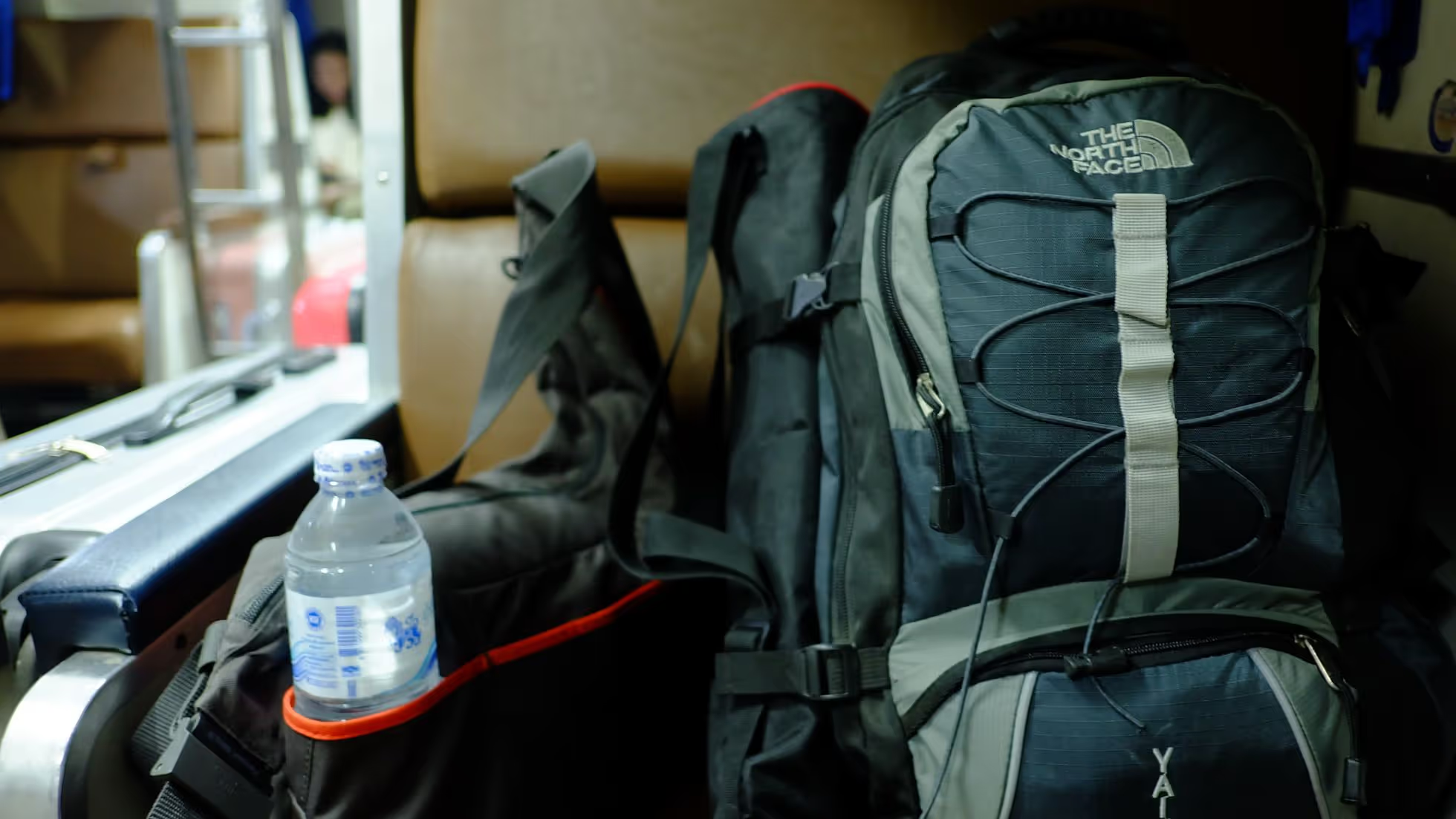
A decent backpack, head torch, money belt, portable charger, waterproof phone case, travel towel, first-aid kit, plug adapters and suitable footwear can easily eat into your pre-departure budget.
So don't buy everything at once.
Make a kit list several months before you travel and start asking for useful items for birthdays and Christmas. Family members are often delighted to buy something practical that they know you'll actually use.
They're not very exciting, but allow money for:
Visas and entry fees, SIM cards or eSIMs, laundry, toiletries, ATM and foreign transaction fees, luggage charges, airport transfers and replacing things you lose along the way.
And then create an emergency buffer.
We'd always rather see someone return home with emergency money they didn't need than find themselves thousands of miles away without enough to deal with an unexpected change of plans.
There are plenty of sensible ways to make your money go further.
Stay in hostels. Eat where locals eat. Cook occasionally. Travel slowly. Compare prices. Avoid unnecessary flights. Decide which experiences really matter to you.
But don't become so obsessed with spending as little as possible that you miss the point of going.
A successful gap year budget isn't necessarily the smallest budget. It's one that allows you to travel safely, experience the things you've dreamed about and cope when something doesn't go quite according to plan.
Do your research. Work out your weekly costs. Add your big-ticket adventures. Budget for the boring stuff. Keep an emergency reserve.
Then go and enjoy it.
Because nobody wants to come home saying, "I went all the way to Peru but couldn't afford Machu Picchu."
View our Dates & Prices
Read next: Gap Year Advice: Plan Your Gap Year With Our 10 Step Guide
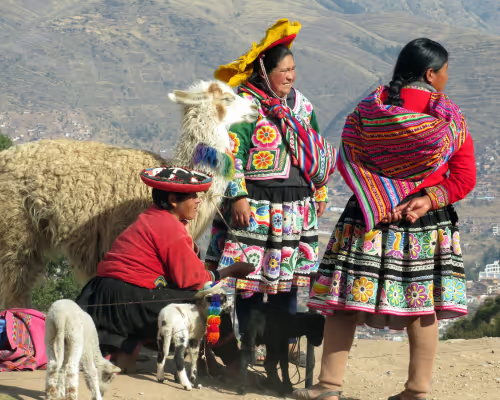
From the mystical Andes to the Amazon rainforest, Peru is a country of breathtaking landscapes, rich history, and vibrant culture. Our 3-week programme takes you off the beaten track, where you’ll contribute to community and conservation projects, while embracing adventure in one of South America’s most iconic destinations.
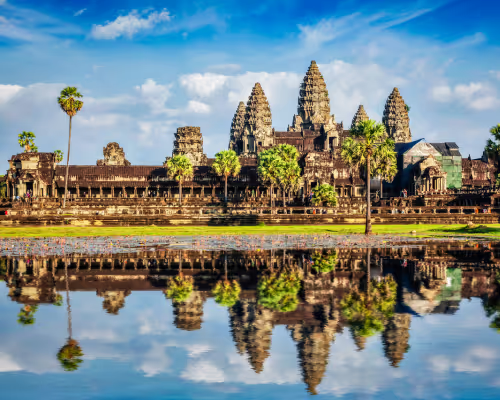
Step into a world of ancient temples, vibrant villages, and lush landscapes on our 4-week Cambodia programme. This is your chance to go beyond the tourist hotspots and immerse yourself in the country’s rich history and inspiring community projects.