.svg)


There are plenty of reasons to take a gap year: seeing the world, meeting new people, trying things that scare you, learning about different cultures and, occasionally, finding yourself in the middle of a festival that you never knew existed.
Because while the big-name festivals might get all the attention, some of the most memorable travel experiences happen at celebrations that are a little more unusual.
From giant water fights to battles with mythical creatures, here are some of the weird and wonderful festivals around the world that might just make you want to add another destination to your gap year travel plans.
Imagine walking down a street on a hot April day when, suddenly, a stranger points a water pistol at you and soaks you from head to toe.
Welcome to Songkran.
Thailand's traditional New Year celebration takes place each April and, alongside its important cultural and religious traditions, has become famous for turning towns and cities into enormous water-fighting arenas. Water guns, hoses, buckets and even water-filled pickup trucks are all fair game.
It's chaotic, hilarious and probably one of the fastest ways to make friends when travelling.
And that's one of the great things about experiencing festivals abroad: you're not simply sightseeing. You're joining in.
Costa Rica might be better known for rainforests, beaches, volcanoes and wildlife, but it also has one of the country's most fascinating traditional celebrations.
The Juego de los Diablitos - or Game of the Little Devils - is celebrated by the Indigenous Boruca people. It commemorates their resistance to the Spanish conquistadors, with participants wearing elaborate masks and taking part in a symbolic battle between the "devils" and a bull.
The celebration takes place around the end of December and beginning of January, depending on the community, and finishes with a huge party.
It's a brilliant reminder that travelling isn't just about seeing famous landmarks. Sometimes, the most interesting experiences are found by learning about the traditions and stories that belong to the people who actually call a place home.
Cambodia's Bon Om Touk, or Water Festival, is another celebration where the clue really is in the name.
Held around the full moon in November, the festival celebrates the annual reversal of the flow between the Tonlé Sap and Mekong rivers. The biggest celebrations take place in Phnom Penh, where enormous crowds gather to watch traditional boat races and spectacular illuminated boats on the river.
It is a spectacular example of how festivals can be closely connected to a country's landscape, history and way of life.
And if you're travelling independently after a structured gap year programme, these are exactly the sorts of experiences you can seek out for yourself: checking the local calendar, finding out what's happening while you're there and saying yes to something you hadn't planned.
Some festivals are strange because they're wonderfully eccentric. Others are extraordinary because they are so deeply rooted in history and culture.
Qoyllur Rit'i is a centuries-old pilgrimage in the Peruvian Andes that combines Indigenous Andean traditions with Catholic beliefs. Thousands of people make their way towards the Sinakara Valley, high in the mountains, for a celebration involving music, dancing, elaborate costumes and religious ceremonies.
It is a world away from the usual tourist itinerary, and that's precisely what makes experiences like this so memorable.
Peru is one of those destinations where it's particularly easy to move beyond the obvious. Yes, there's Machu Picchu. But there's also the Sacred Valley, the Amazon rainforest, local communities and countless opportunities to experience a culture that stretches back long before modern tourism.
You might not plan your gap year around festivals. In fact, we'd probably recommend having a few other things on the itinerary too.
But discovering local celebrations can be one of the best ways to experience a destination.
A festival gives you a glimpse into what matters to a community - its history, beliefs, food, music, humour and traditions. It also gets you out of the role of tourist and into the middle of something happening around you.
And that's one of the reasons we love the idea of combining a structured programme with independent travel.
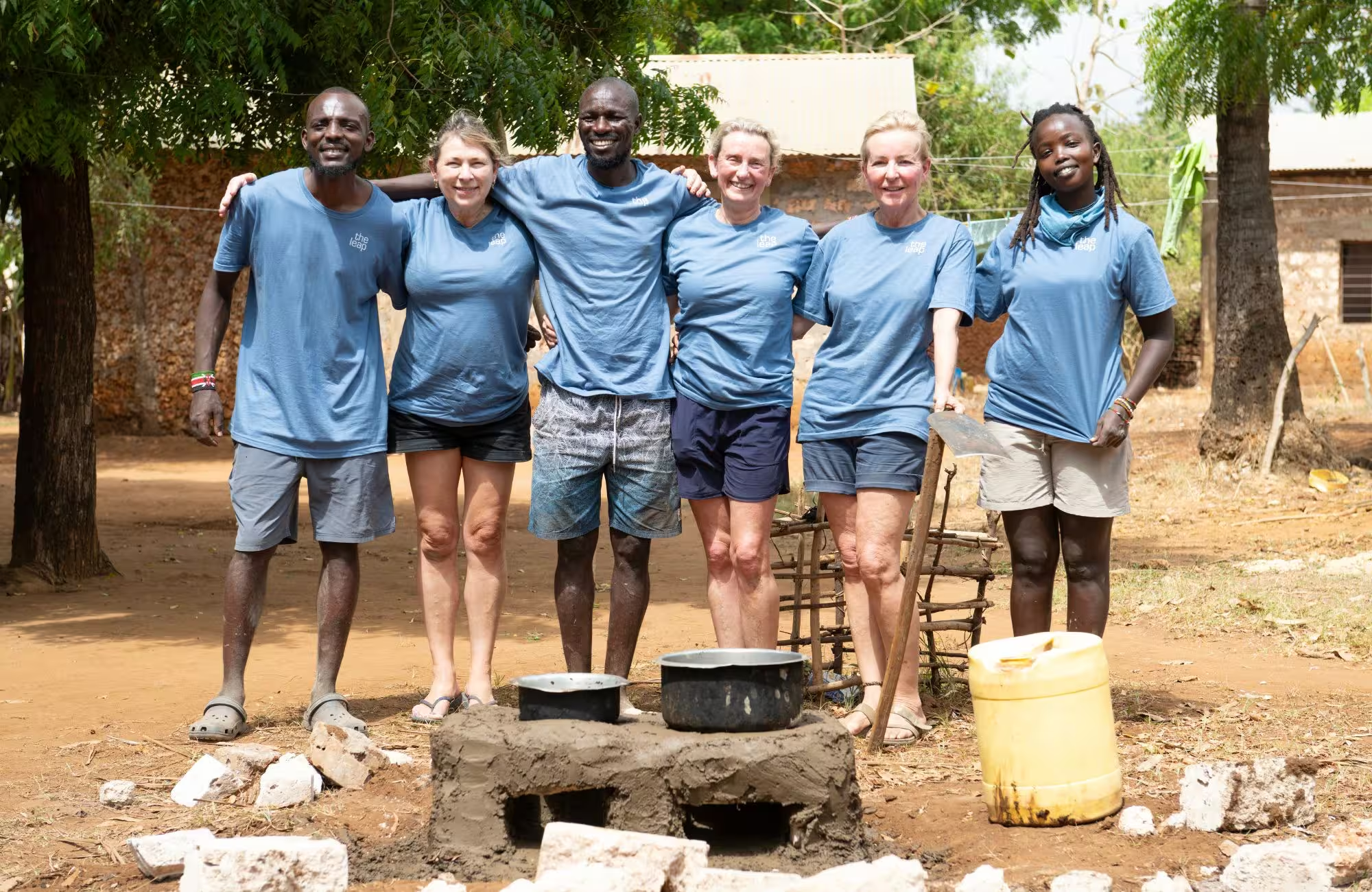
Starting your gap year with The Leap means you can spend your first few weeks travelling with a supportive group, experiencing a new culture and getting used to being away from home. Then, when you're ready, you can continue your adventure independently, with the confidence to navigate new places, meet people and perhaps even discover a festival you've never heard of.
Because sometimes the best travel stories start with something you didn't plan.
And if your gap year happens to involve being attacked by 17 strangers with water pistols, watching hundreds of illuminated boats glide down a river or finding yourself in the middle of an ancient cultural celebration...
Well, that's a pretty good story to bring home.
View our Dates & Prices
Read next: Asia, Africa or South America? Which is better for backpacking?
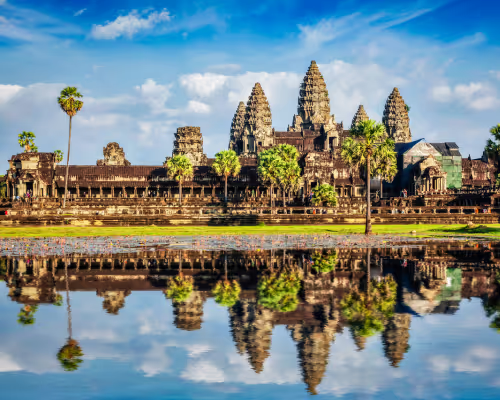
Step into a world of ancient temples, vibrant villages, and lush landscapes on our 4-week Cambodia programme. This is your chance to go beyond the tourist hotspots and immerse yourself in the country’s rich history and inspiring community projects.
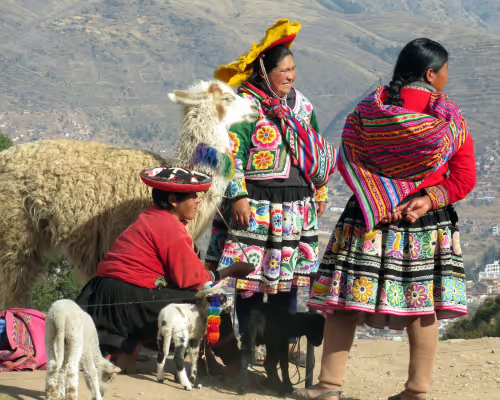
From the mystical Andes to the Amazon rainforest, Peru is a country of breathtaking landscapes, rich history, and vibrant culture. Our 3-week programme takes you off the beaten track, where you’ll contribute to community and conservation projects, while embracing adventure in one of South America’s most iconic destinations.