.svg)


When people think about gap year trips, they often picture incredible landscapes, unforgettable wildlife and exciting adventures. And while those experiences are certainly part of the journey, the moments that leave the biggest impact often happen far away from the tourist trail.
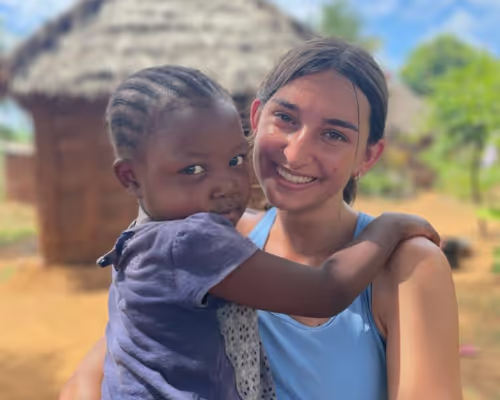
Living in a rural Kenyan community is one of those experiences.
It's here, sharing meals with local families, working alongside community members and adapting to a completely different way of life, that many young people discover a confidence they never knew they had.
While a classroom can teach knowledge, it's often real-world experiences that teach resilience, communication and independence. Here's why spending time in a rural Kenyan community can become one of the most valuable parts of a gap year.
Confidence isn't something you're given. It's something you build.
During a gap year in Kenya, you'll face situations that are completely new. Whether it's helping with a community project, navigating a different culture or communicating without relying on familiar routines, every day encourages you to take small steps outside your comfort zone.
At first, that can feel daunting.
But with each new challenge comes a small victory. Before long, you'll realise you're capable of much more than you thought.
Many students return home surprised by how naturally they've become more independent, resourceful and willing to embrace new experiences.
The best gap year trips aren't about simply seeing a destination, they're about experiencing it.
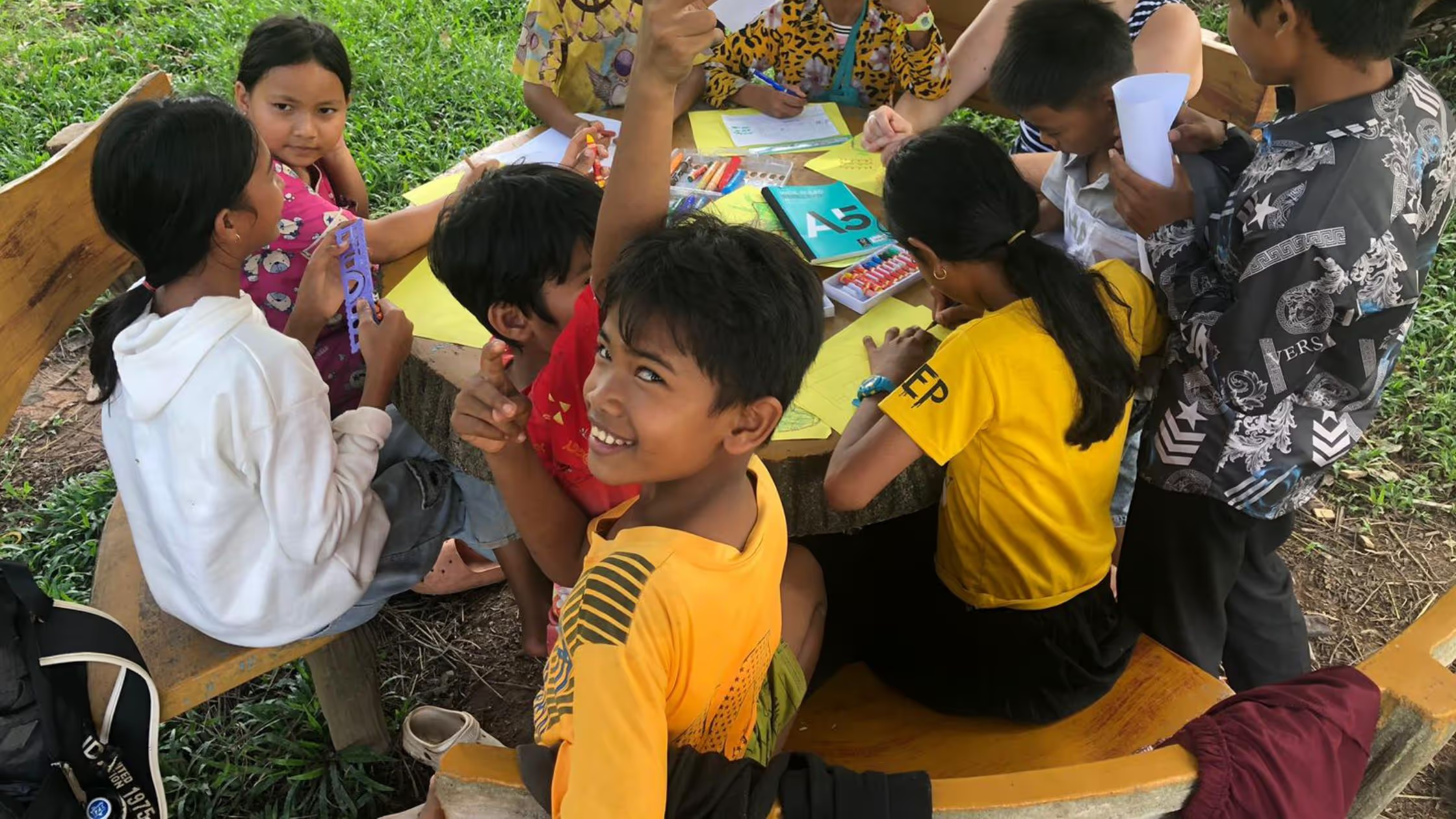
Spending time in a rural Kenyan community allows you to slow down and connect with people on a much deeper level than a typical holiday ever could.
You'll learn about local traditions, celebrate everyday moments, discover different perspectives and experience the warmth and generosity that Kenyan communities are known for.
These genuine connections often become the memories students talk about long after they've returned home.
One of the biggest surprises for many students is how much their communication skills improve.
When you're working alongside people from different backgrounds, you quickly learn that communication isn't just about speaking the same language.
It's about listening.
It's about observing.
It's about showing respect, asking questions and being open to learning from others.
These are skills that universities and employers value just as highly as academic achievement because they're essential for working in diverse teams and building meaningful relationships.
There's something incredibly powerful about experiencing another way of life.
Living in a rural community encourages you to see the world through a different lens. You begin to appreciate different cultures, different priorities and different approaches to everyday life.
It challenges assumptions, broadens your perspective and helps you develop empathy, one of the most valuable qualities anyone can have in an increasingly connected world.
For many students, this shift in perspective becomes one of the defining moments of their gap year.
One of the unexpected benefits of meaningful gap year travel is that personal development happens naturally.
As you adapt to new environments, work as part of a team and contribute to community projects, you're also developing transferable skills such as:
These aren't just useful during your gap year, they're skills you'll carry into university, future careers and everyday life.
The most rewarding experiences aren't about "helping" for the sake of it.
They're about learning alongside local communities, sharing experiences and understanding how long-term partnerships create meaningful impact.
Responsible gap year programmes focus on working with local organisations that understand their communities best. That means your experience becomes one of collaboration, learning and mutual respect.
It's a far richer experience than simply passing through as a visitor.
Ask someone who has spent time living in a rural Kenyan community what they remember most, and it's rarely just the wildlife or the scenery.
It's the conversations.
The laughter.
The friendships.
The challenges they overcame.
The moments that pushed them outside their comfort zone.
Those are the experiences that stay with you.
At The Leap, we've seen students arrive feeling nervous about travelling so far from home, only to return with a new sense of confidence and belief in themselves. Time and again, parents tell us they notice the difference too - greater independence, maturity and a willingness to embrace new opportunities.
If you're researching gap year trips, it's easy to compare destinations, itineraries and activities.
But perhaps the better question is this:
Which experience will help me grow the most?
Living in a rural Kenyan community isn't just about travelling to East Africa. It's about immersing yourself in a different culture, contributing to meaningful projects and discovering strengths you never knew you had.
Long after you've unpacked your bag, you'll still carry the confidence, resilience and perspective that came from stepping into a world so different from your own.
That's why the best gap year trips don't simply change where you've been, they change how you see yourself.
If you're looking for a gap year that combines adventure with purpose, Kenya offers far more than incredible wildlife and beautiful landscapes. It offers the chance to grow through challenge, culture and contribution, and that's an experience no classroom can replicate.
View our Dates & Prices
Read next: Does Volunteering Abroad Count as Work Experience?
From the savannahs of the Maasai Mara to the turquoise waters of the Indian Ocean, Kenya is a land of breathtaking beauty, rich culture, and impactful conservation work. Our 4-week programme combines wildlife conservation, community engagement, and adventure, giving you the chance to experience Kenya in a way that few travellers do.
Open to under 18 students from schools across the UK, this adventure offers the perfect mix of fun, friendship, and impact. Work together as a team on vital marine conservation and community projects in the stunning coastal region of Kuruwitu. From regenerating coral reefs to building sustainable gardens, your efforts will help protect ecosystems and empower local communities.