.svg)


Contribution matters. So does the way you talk about it.
Working alongside conservation and community projects can provide powerful evidence for your CV. It can demonstrate teamwork, communication, initiative, adaptability and a willingness to learn.
However, phrases such as “I saved a community” or “I transformed a conservation project” can undermine an otherwise strong application.
They exaggerate what one person can achieve during a short programme and overlook the expertise of the local organisations doing the long-term work.
A strong CV doesn’t need a hero story.
It needs an honest explanation of what you contributed, how you worked and what you learned.
Your Leap was more than general travel, but you were not arriving as the expert.
Each programme is shaped by established conservation organisations, NGOs, community leaders and social enterprises with detailed knowledge of their own environments and priorities.
Your role was to work alongside them.
You may have:
This still provides valuable work-related evidence. In fact, recognising the limits of your role shows maturity, cultural awareness and professional judgement.
You can include your Leap under Volunteering if that fits the structure of your CV.
However, you could also use headings such as:
Describe it as a structured international programme or project-led experience, rather than reducing it to “volunteering abroad”.
Do not describe it as paid employment or an internship unless that is genuinely what you completed.
Accuracy builds trust.
Your wording should make it clear that you contributed to work led by established local partners.
Useful phrases include:
These phrases don’t diminish your role. They explain it accurately and professionally.
Saviour language presents a short-term visitor as the person who fixed, rescued or transformed another community.
It can include phrases such as:
The intention may be positive, but the wording overlooks local knowledge, existing leadership and long-term work.
Instead, explain the specific activity and your contribution to it.
Avoid/ Use instead
1. Saved coral reefs in Kenya
Worked alongside marine conservation specialists on established coral-restoration activities
2. Helped poor local families
Contributed to community-led sustainability projects alongside local partners
3. Built stoves for communities
Worked as part of a team to construct fuel-efficient Jiko stoves under local guidance
4. Taught children in Cambodia
Supported activities delivered by established local education partners
5. Rescued wildlife in Costa Rica
Assisted with practical work at an established wildlife sanctuary, following staff guidance
6. Transformed a local project
Contributed time and practical support to an ongoing partner-led initiative
The stronger version is not less impressive. It is more credible.
These three terms are often confused.
The task you personally completed.
For example:
Prepared coral plugs under the guidance of marine conservation specialists.
The immediate, measurable result of the team’s work.
For example:
Contributed as part of a team to preparing coral plugs for an established reef-restoration programme.
The wider, long-term change created by the project.
For example:
Supporting the long-term health and resilience of the local marine environment.
Be careful about claiming long-term impact unless it has been measured and confirmed by the project partner.
You can confidently describe your activity and contribution. Let the organisation leading the project evidence the wider impact.
If a project result was achieved by the entire team, don’t present it as something you accomplished alone.
I planted 500 trees and restored the local forest.
Contributed as part of a team to a partner-led reforestation programme, assisting with tree planting and habitat-restoration activities.
Where accurate figures are available, you can use them — but clearly explain whether they represent your individual work, your team’s output or the wider project’s achievement.
Use this structure:
Worked alongside + project partner + specific contribution + skill or learning
For example:
Worked alongside local marine conservation specialists on coral-restoration activities, developing teamwork, attention to detail and environmental awareness.
Or:
Supported community-led sustainability projects as part of an international team, strengthening cross-cultural communication and practical problem-solving skills.
Or:
Assisted with day-to-day wildlife sanctuary activities under staff guidance, demonstrating reliability, adaptability and a willingness to learn.
This gives the employer the information they need without exaggerating your position.
You may not be able to claim responsibility for the long-term outcome of a project, but you can provide clear evidence of how you behaved.
Consider:
These behaviours are highly relevant to employers because they provide insight into how you might operate in their workplace.
The same principles apply when speaking about your experience.
Explain:
You could say:
Our role was to support an established project rather than arrive with our own solution. I learned the importance of listening to the people with local expertise, following their guidance and understanding how our task fitted into their longer-term goals.
This demonstrates cultural awareness, humility and the ability to work constructively with specialists.
Keep the focus on collaboration, contribution and learning.
Communities are not defined solely by poverty, disadvantage or need. Recognise their knowledge, skills, leadership and agency.
Be specific about your activity and cautious about claiming long-term change.
“Helped people abroad” tells an employer very little. Name the project activity and the skills involved.
Responsible language does not mean dismissing your contribution. You still gave your time, energy and effort, completed practical tasks and developed valuable skills.
Describe those elements confidently.
Before adding your Leap project experience to an application, ask:
If the answer is yes, you have a strong and credible description.
For help structuring the complete entry, read How to Put Your Leap Experience on Your CV.
For interview preparation, explore How to Talk About Your Leap Experience in a Job Interview.
Your Leap gave you access to inspiring people and established projects tackling genuine environmental and community challenges.
You were there to listen, learn and contribute.
Presenting the experience honestly does not make it less valuable. It shows that you understand what meaningful collaboration looks like.
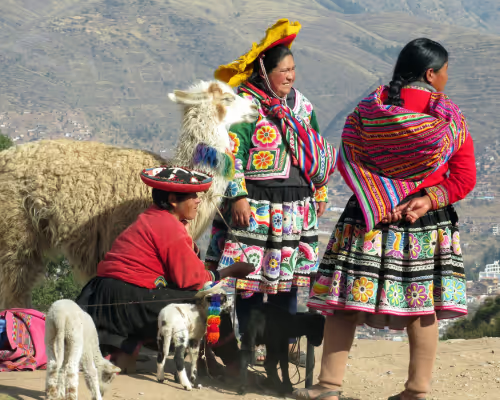
From the mystical Andes to the Amazon rainforest, Peru is a country of breathtaking landscapes, rich history, and vibrant culture. Our 3-week programme takes you off the beaten track, where you’ll contribute to community and conservation projects, while embracing adventure in one of South America’s most iconic destinations.

Swap the ordinary for the extraordinary - explore Costa Rica’s vibrant rainforests, rugged coastlines, and cloud forests while making a real difference. Our 4-week programme blends hands-on conservation work with adrenaline-fuelled adventure, taking you off the beaten track to work with turtles, restore ecosystems, and support local communities.
Your Leap is packed with evidence for CVs,applications and interviews. Explore the complete series and learn how to turnwhat you did, learned and overcame into something that helps you stand out.
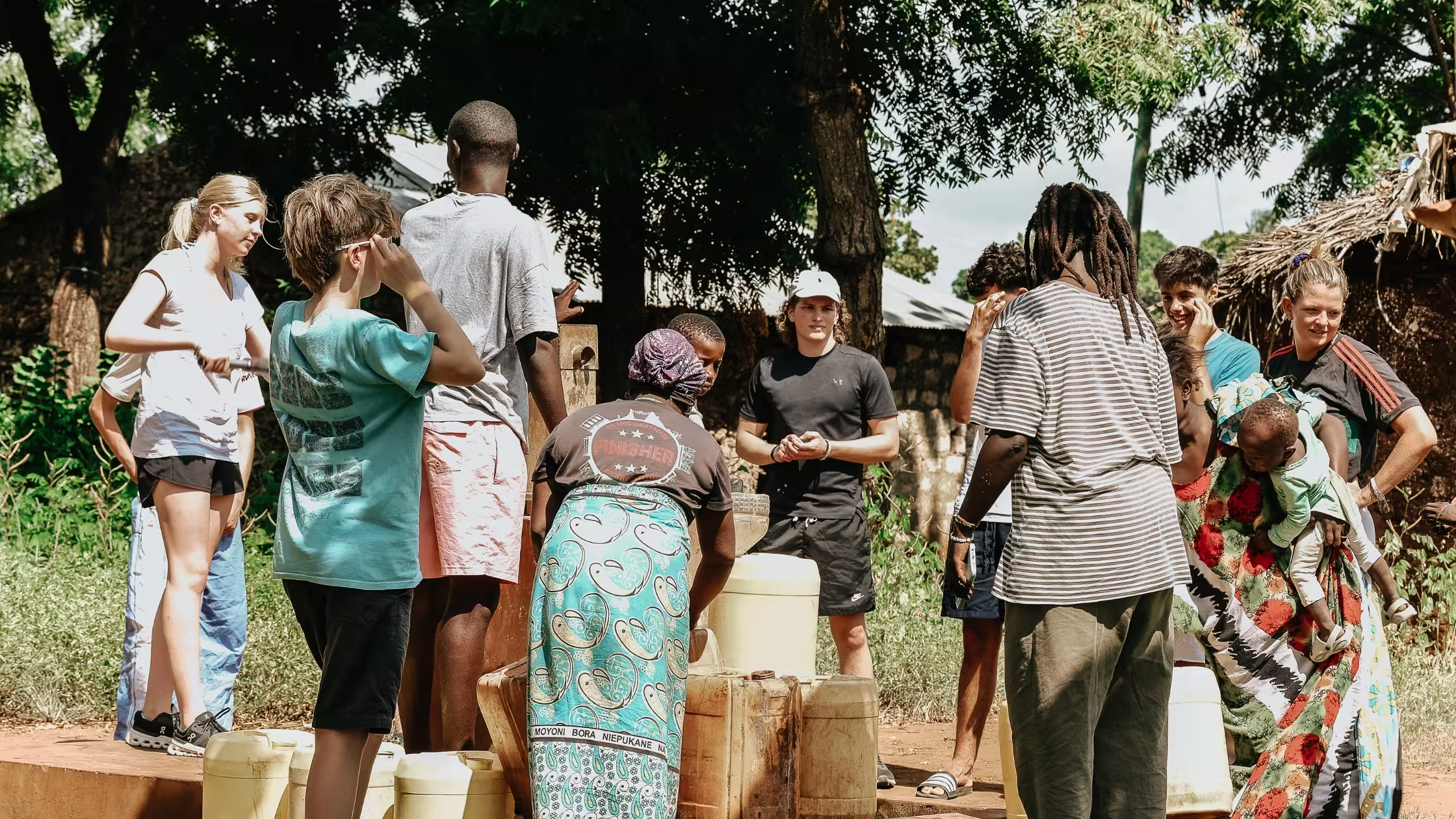
Discover where your Leap belongs on your CV and how to turn project work and team challenges into strong evidence.
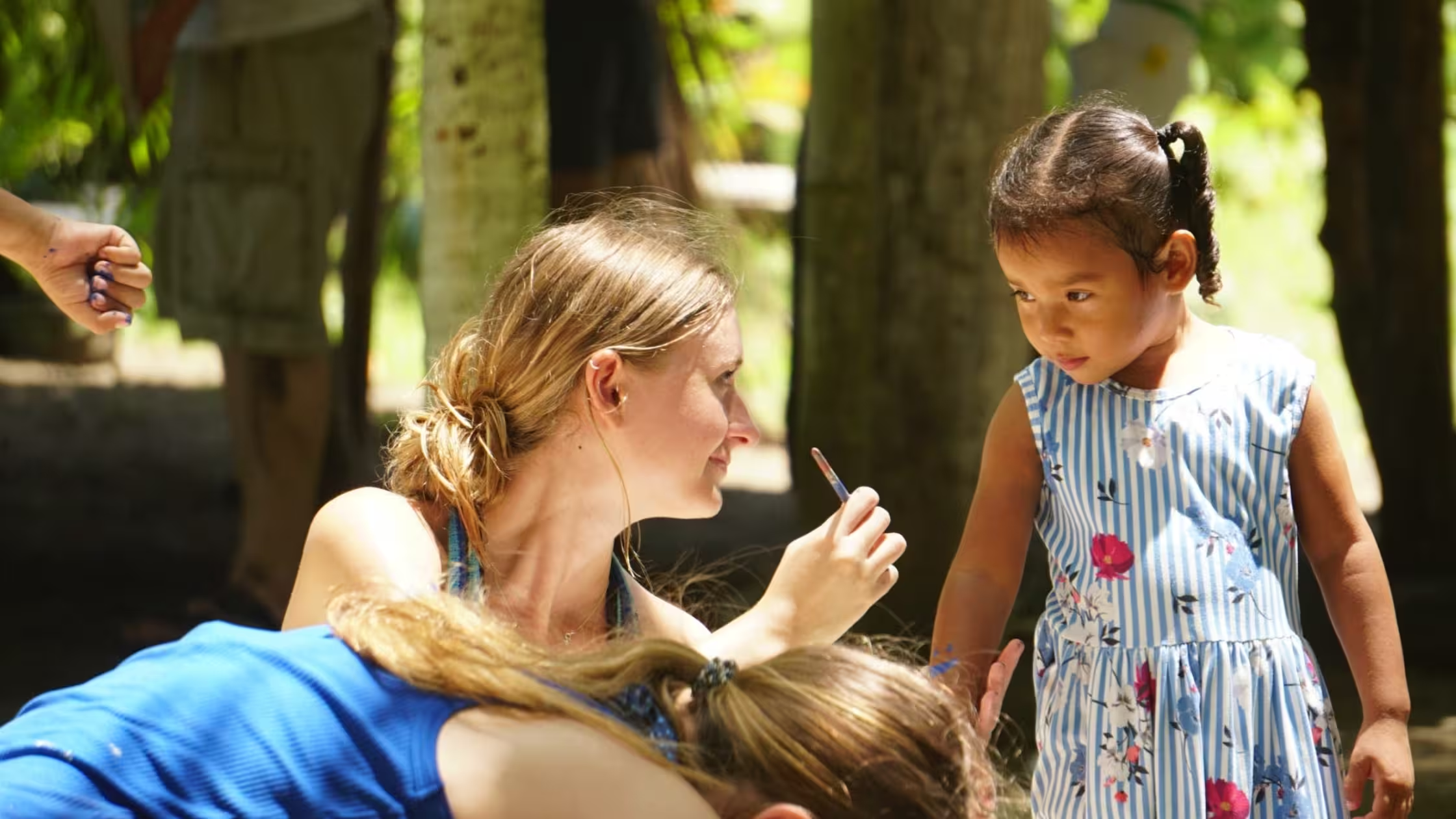
Identify the communication, teamwork, leadership and resilience hidden inside your adventure, and find real moments that prove them.
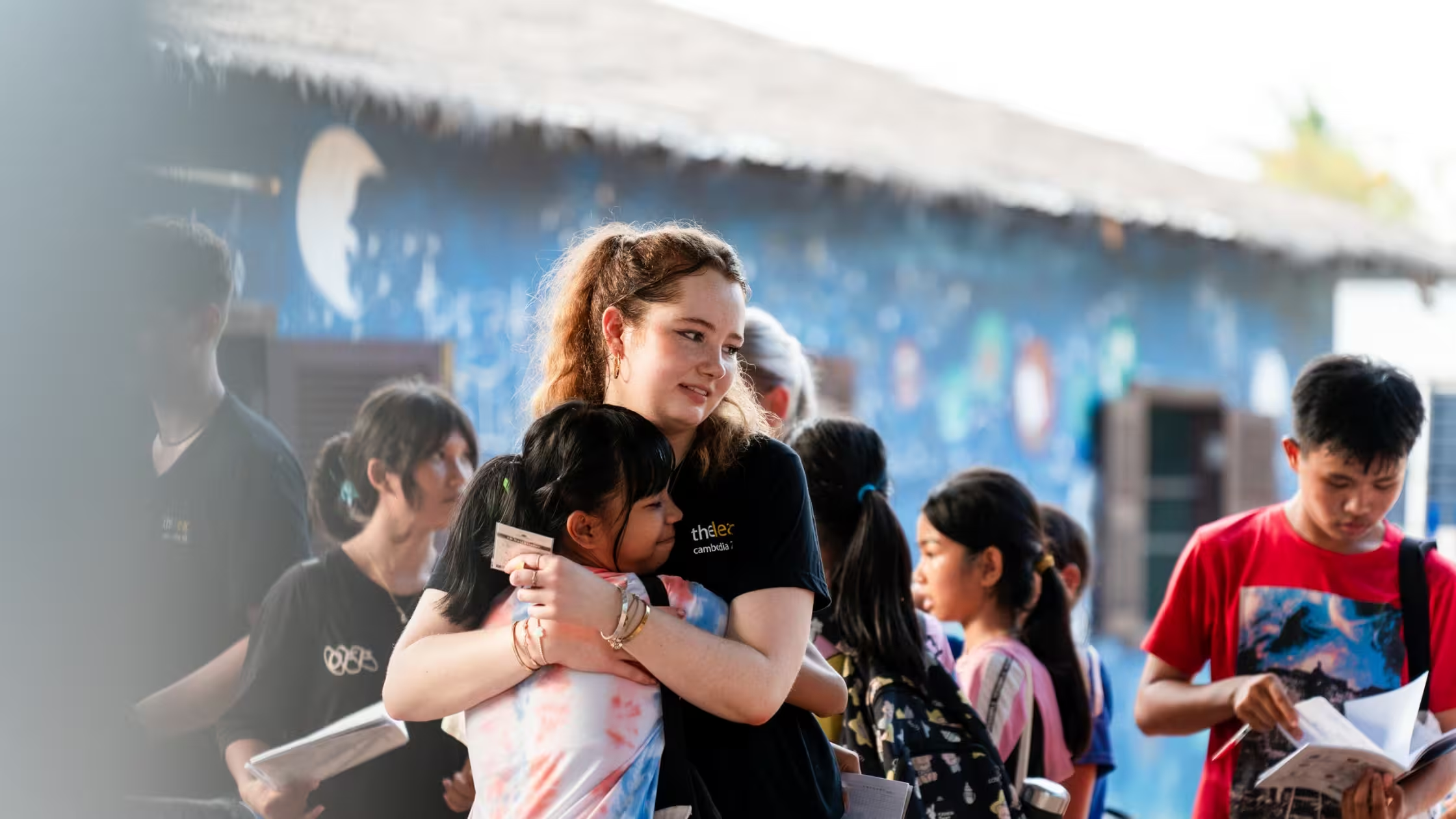
Learn how to explain your contribution professionally, credit local expertise and avoid exaggerating the impact of your role.
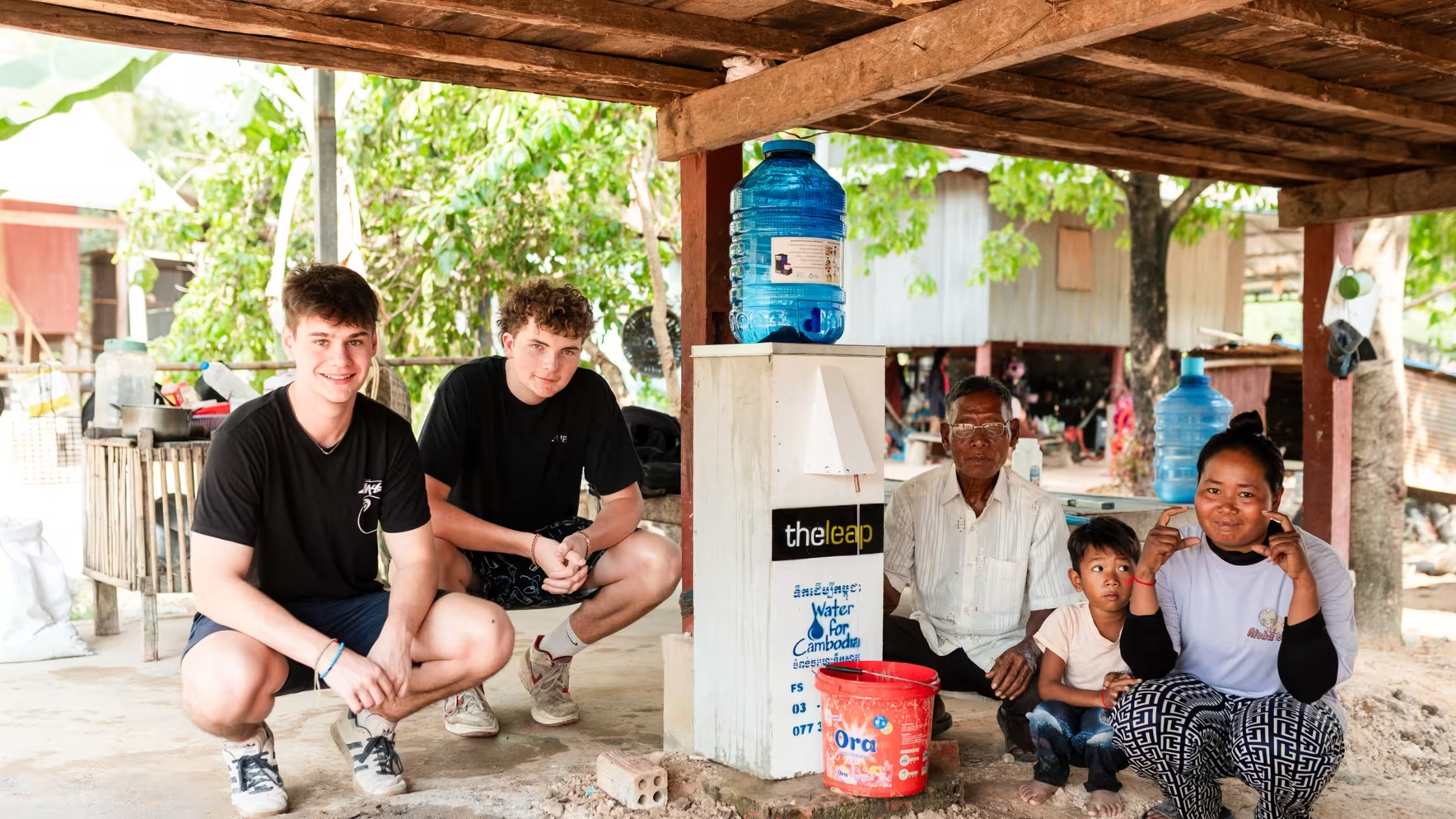
Connect your project experience, personal growth and transferable skills to your chosen course and future university plans.
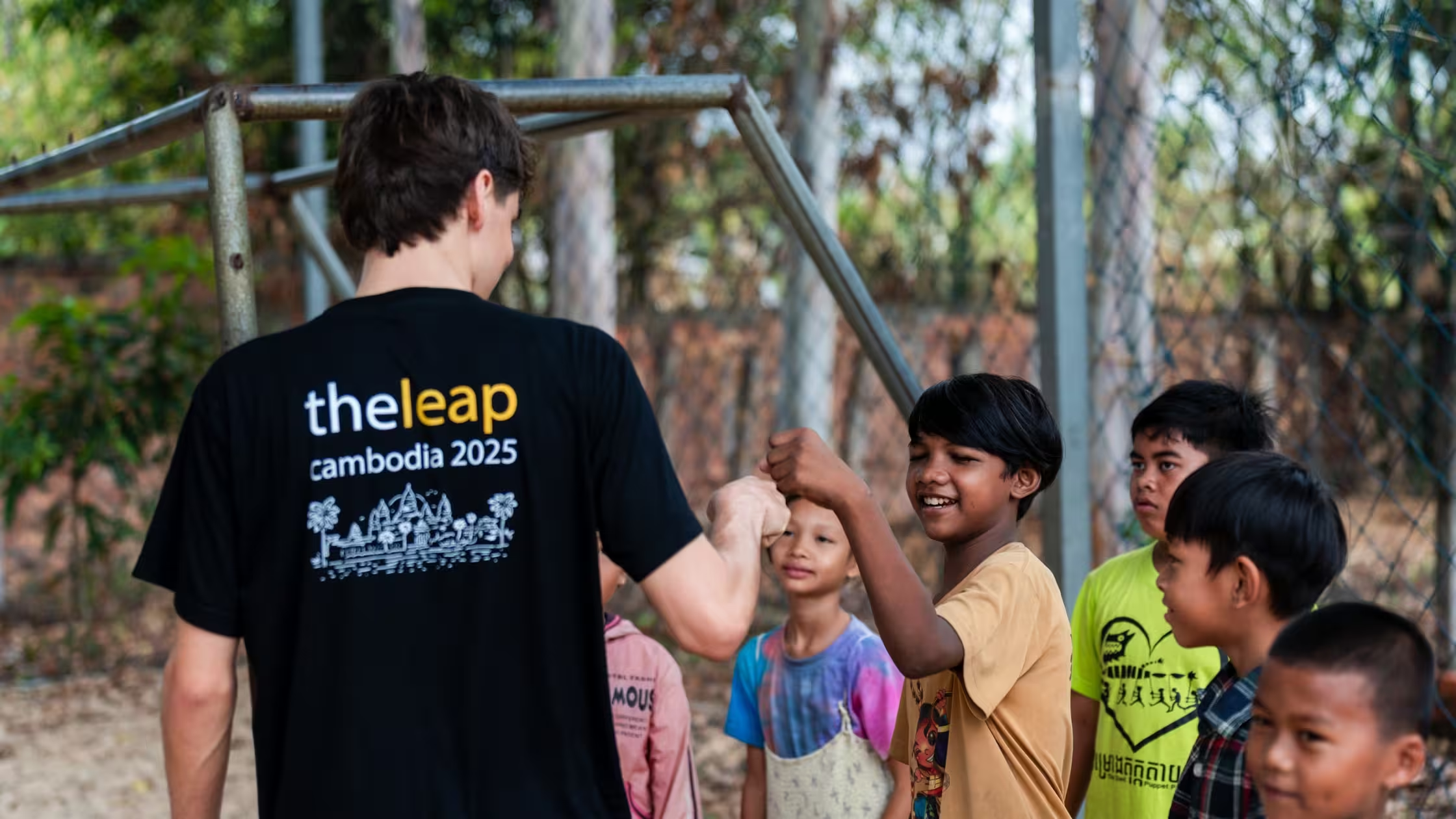
Understand when volunteering counts as valuable work experience and how to present your projects, responsibilities and skills accurately.
Turn your projects, challenges and team experiences into confident interview answers using the simple STAR technique.
Your strongest evidence is often hidden in the smaller moments — when you stepped forward, adapted to change, supported your team or kept going when things felt difficult.
Capture those stories while they are still fresh and turn them into evidence you can use on your CV, in your UCAS application and during interviews.
Download our free CV/UCAS Gold Workbook to identify your strongest examples and shape them into confident, ready-to-use answers.