
.svg)


Your Leap can provide powerful evidence for your university application.
But simply writing “I travelled to Kenya ” or “I volunteered in Costa Rica” won’t tell an admissions team very much.
They don’t need your travel itinerary.
They want to know what interested you, what you learned, how you responded and why the experience has helped prepare you for your chosen course.
The destination provides the setting. Your reflection gives the experience academic value.
For students applying from 2026 entry onwards, the UCAS personal statement is divided into three questions:
Your Leap is likely to be particularly relevant to the third question, where UCAS encourages applicants to discuss work experience, volunteering, extracurricular activities and experiences since leaving education.
It could also support the first question if something you experienced deepened your interest in the subject. If you completed a relevant formal qualification, this may also provide evidence for the second question.
The key is to place the experience where it provides the strongest and most relevant evidence. See the current UCAS personal statement guidance.
One of the most common mistakes is spending too many words describing the activity.
For example:
During my Leap, I visited Kenya, went on safari, helped with coral conservation, built Jiko stoves and visited community projects.
This tells the admissions team what happened, but not what the applicant gained from it.
A stronger response explains:
Your Leap should not appear as a travel diary. It should provide evidence of curiosity, reflection and readiness for further study.
A useful way to structure your example is:
What did you do or observe?
What did it teach you or make you think about?
How does that insight prepare you for your chosen course?
For example:
Working alongside marine conservation specialists introduced me to the practical challenges of protecting coral ecosystems while balancing environmental and community priorities. It strengthened my interest in studying environmental science and showed me the importance of combining scientific knowledge with local expertise.
The experience is specific, but the emphasis is on learning and academic relevance.
Use your Leap here if it genuinely influenced or strengthened your interest in the subject.
For example, working alongside:
Don’t force a connection that isn’t there.
Instead, identify a specific conversation, observation or project activity that prompted you to ask new questions about the subject.
This question mainly focuses on formal education.
However, if you completed the Level 3 International Volunteering Diploma, you can explain how its reflective and project-based elements developed relevant academic skills.
Depending on the course, these might include:
The Diploma is worth 16 UCAS points, but don’t rely on the points alone. Explain what completing it required and how that learning has prepared you for further study.
This is likely to be the natural home for most Leap experiences.
You could discuss:
The important part of this question is “why are these experiences useful?”
Don’t stop after describing the experience. Explain how it has prepared you to study, contribute and manage university life.
Different elements of a Leap can support different academic interests.
You might discuss:
You might discuss:
You might discuss:
You might discuss:
Even when the project is not directly connected to your chosen subject, your Leap can still demonstrate:
Choose the qualities most relevant to the demands of your course.
I travelled to Costa Rica and volunteered at a wildlife sanctuary. I also visited the cloud forest, learned to surf and saw lots of wildlife.
Supporting practical activities at an established wildlife sanctuary introduced me to the complexity of responsible animal care and conservation. Following guidance from specialist staff developed my attention to detail and showed me the importance of evidence-led decision-making.
My Leap made me more independent and changed my life.
Living and working with a new team in an unfamiliar environment required me to manage my time, take responsibility and adapt to different personalities. This has made me more confident about the independence and collaboration required at university.
Simply attending a programme does not automatically make an application stronger.
The value comes from how well you reflect on it.
Ask yourself:
The more specific your answer, the more personal and convincing it will be.
Describe how you worked alongside local organisations rather than presenting yourself as the person who solved a community or environmental challenge.
For example:
I helped save an endangered coral reef.
Working alongside marine specialists on an established coral-restoration programme helped me understand the time, expertise and long-term monitoring required for effective conservation.
This version demonstrates learning, respect and academic curiosity.
You don’t need to include everything that happened during your Leap.
One carefully chosen and well-explained experience is more valuable than a long list of activities.
Before including an example, ask:
If the answer is no, choose a stronger example.
Your application should sound like you.
Avoid filling it with complicated language that you would never normally use. Admissions teams want clear, genuine reflection rather than dramatic claims or a list of fashionable phrases.
Use examples and templates to help organise your thinking, but make sure the final words reflect your real experience and personal reasons for applying.
Your Leap can help your UCAS application stand out — but not simply because you travelled somewhere extraordinary.
Its real value lies in the questions you asked, the people you learned from, the responsibilities you accepted and the way the experience influenced your thinking.
Don’t just tell an admissions team where you went.
Show them how the experience has prepared you for where you want to go next.

Swap the ordinary for the extraordinary - explore Costa Rica’s vibrant rainforests, rugged coastlines, and cloud forests while making a real difference. Our 4-week programme blends hands-on conservation work with adrenaline-fuelled adventure, taking you off the beaten track to work with turtles, restore ecosystems, and support local communities.

Step into a world of ancient temples, vibrant villages, and lush landscapes on our 4-week Cambodia programme. This is your chance to go beyond the tourist hotspots and immerse yourself in the country’s rich history and inspiring community projects.
Your Leap is packed with evidence for CVs,applications and interviews. Explore the complete series and learn how to turnwhat you did, learned and overcame into something that helps you stand out.
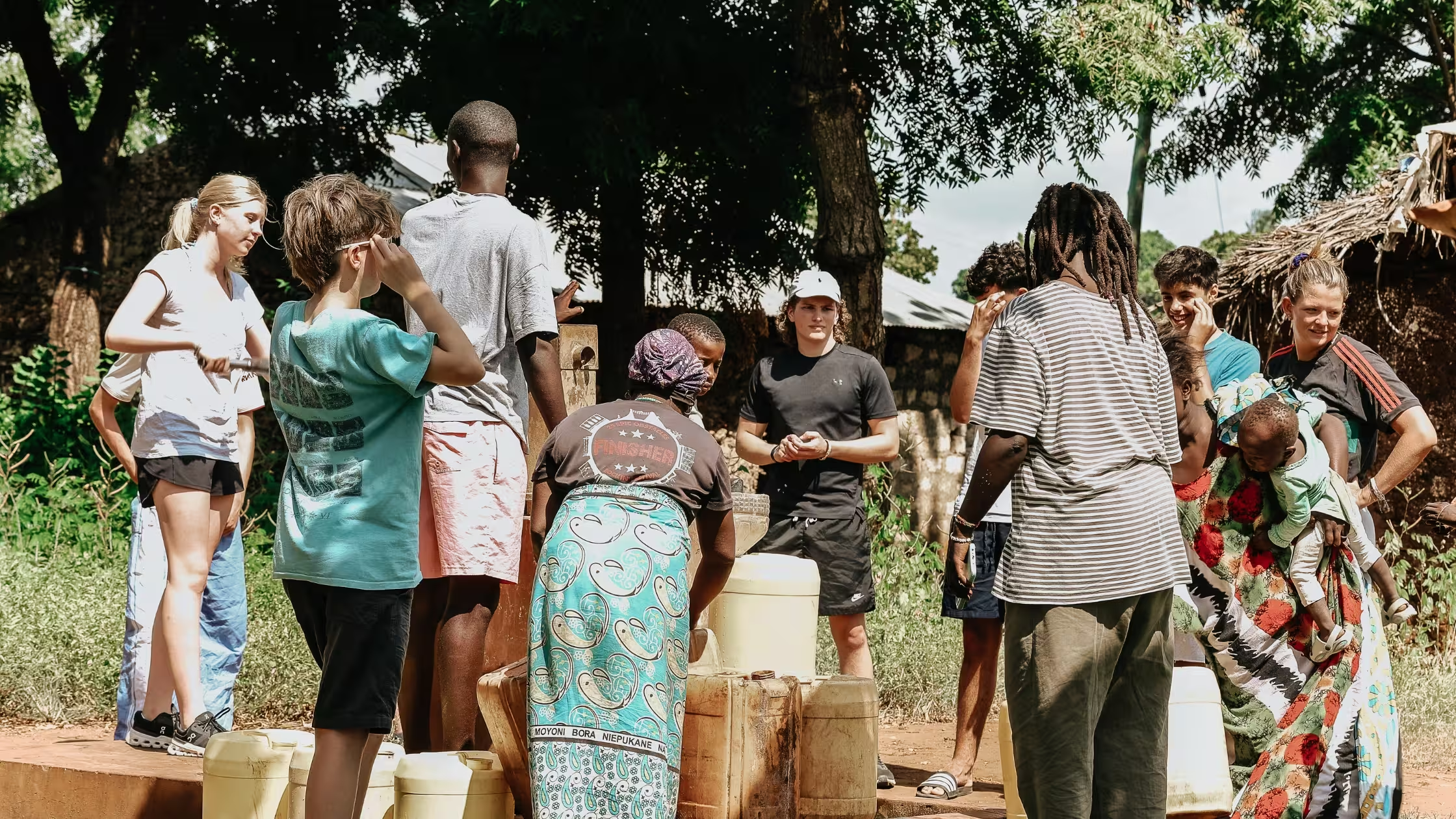
Discover where your Leap belongs on your CV and how to turn project work and team challenges into strong evidence.

Understand when volunteering counts as valuable work experience and how to present your projects, responsibilities and skills accurately.
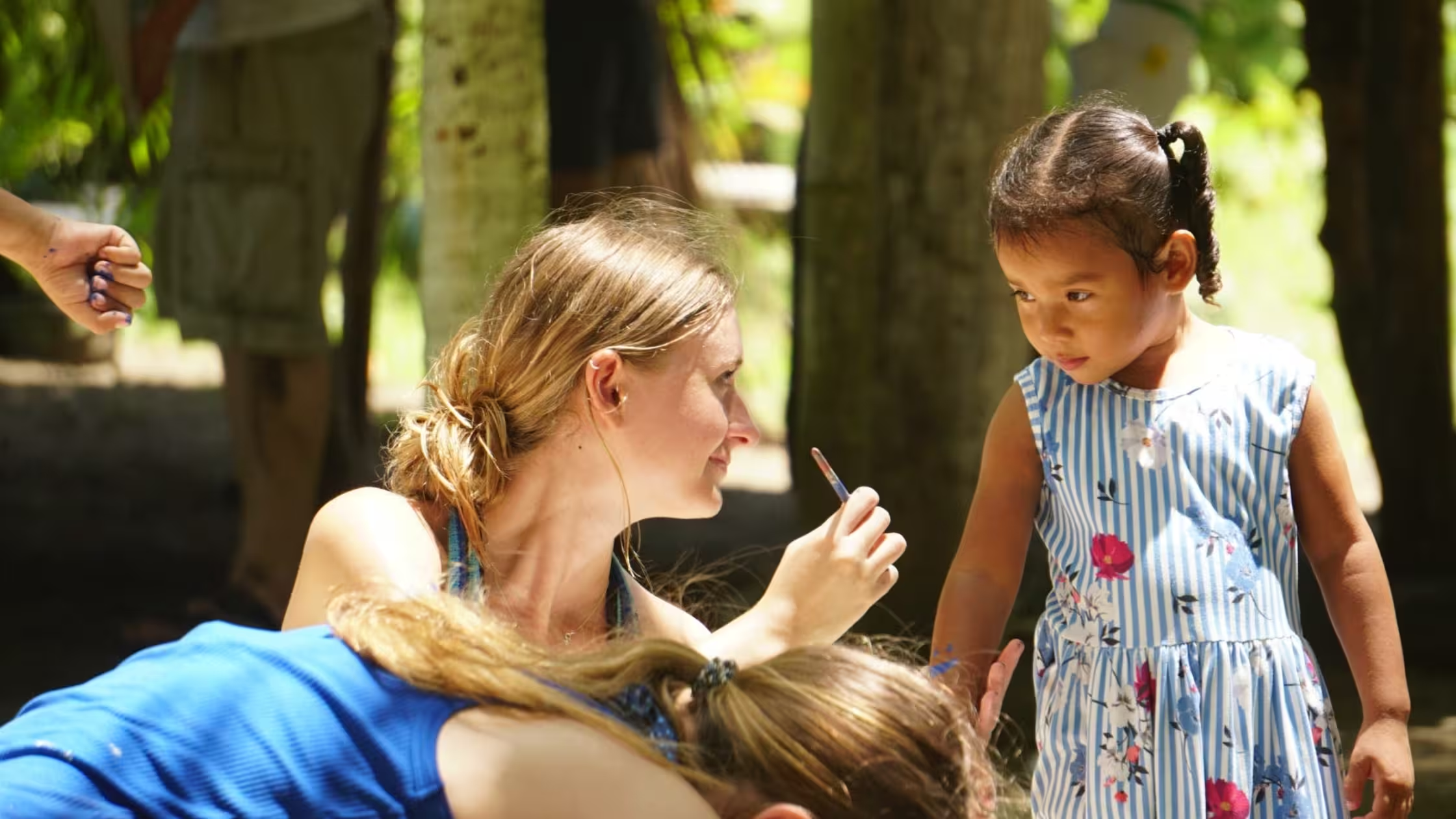
Identify the communication, teamwork, leadership and resilience hidden inside your adventure, and find real moments that prove them.
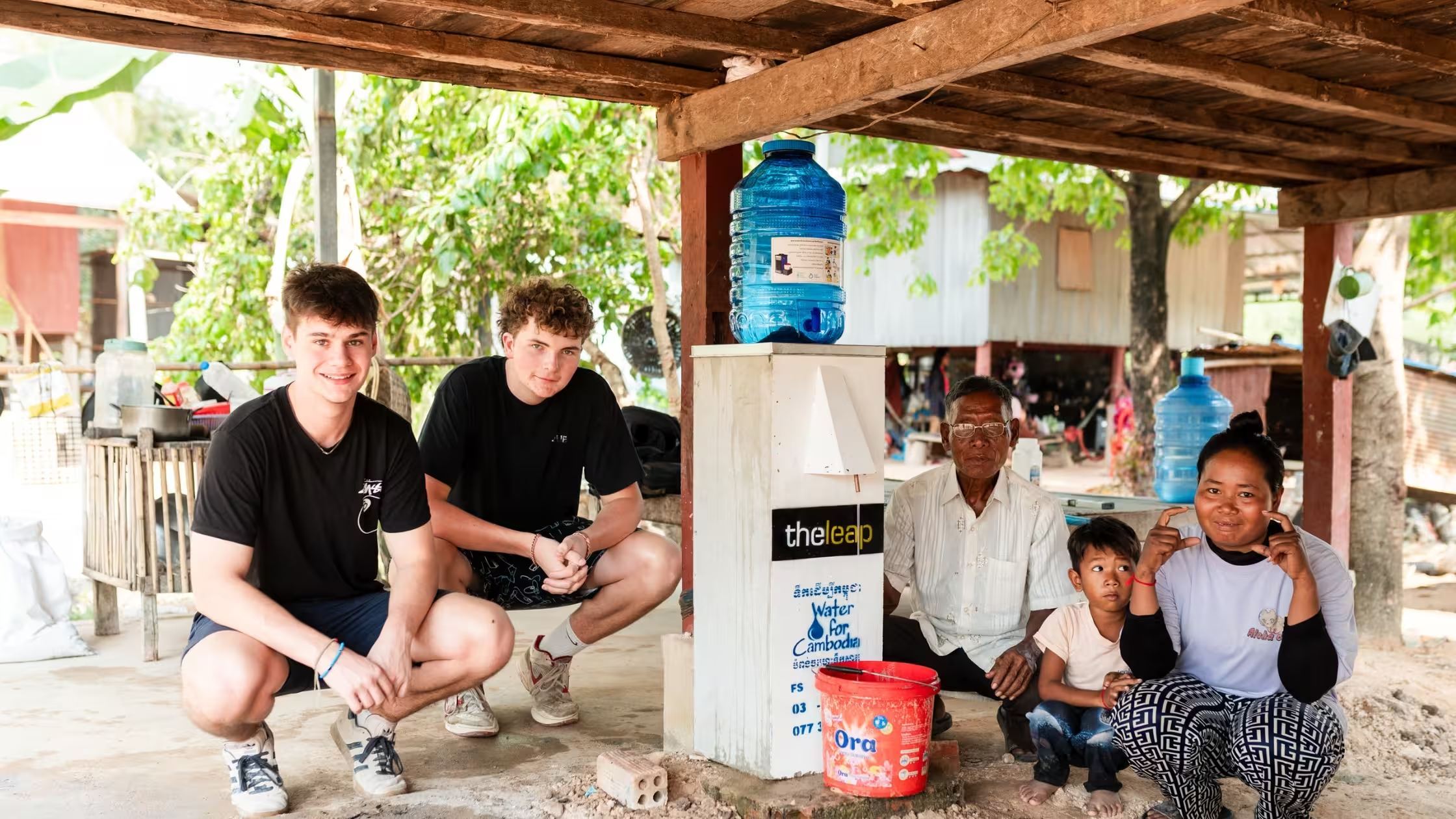
Connect your project experience, personal growth and transferable skills to your chosen course and future university plans.
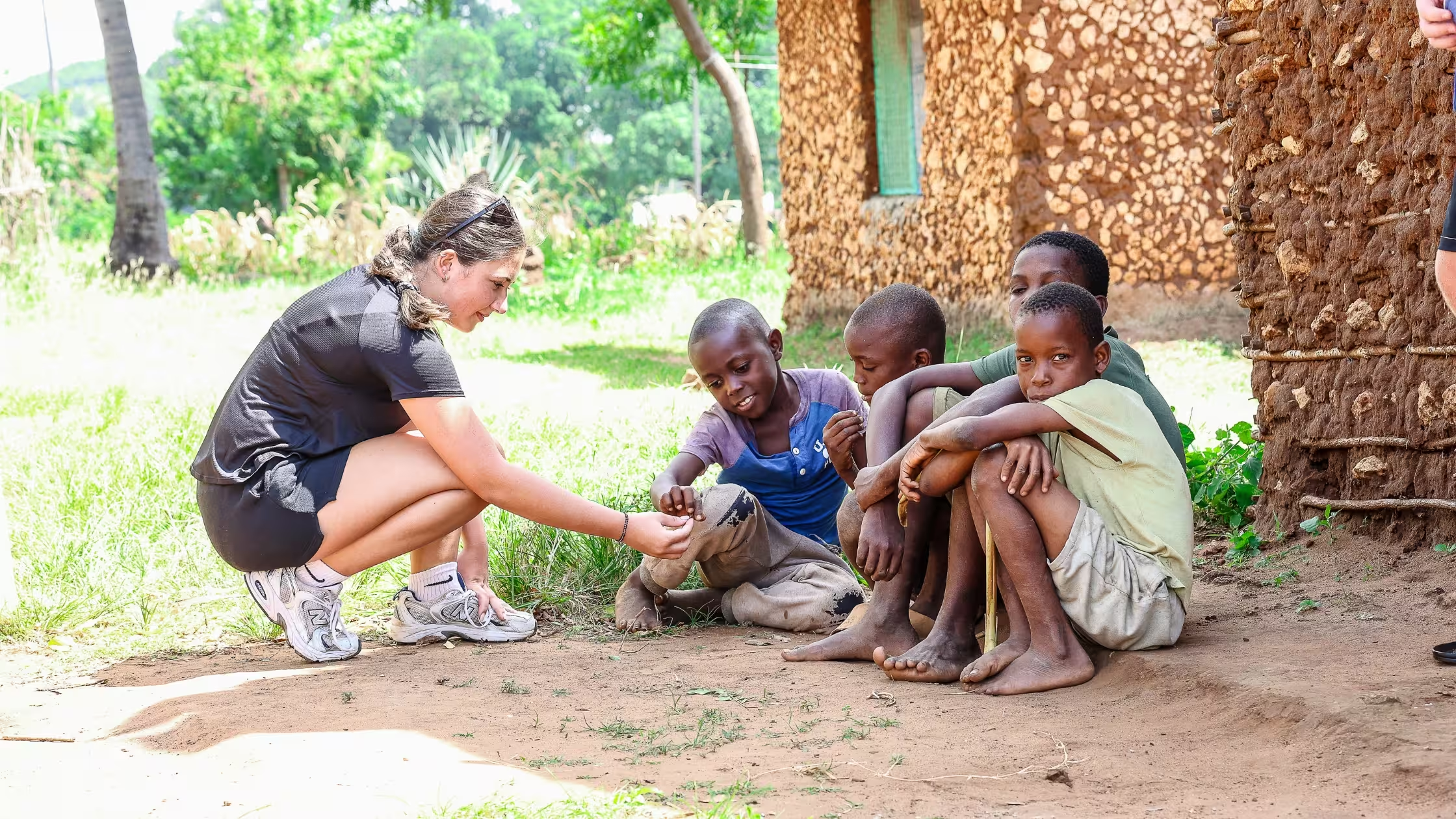
Turn your projects, challenges and team experiences into confident interview answers using the simple STAR technique.

Learn how to explain your contribution professionally, credit local expertise and avoid exaggerating the impact of your role.
Your strongest evidence is often hidden in the smaller moments — when you stepped forward, adapted to change, supported your team or kept going when things felt difficult.
Capture those stories while they are still fresh and turn them into evidence you can use on your CV, in your UCAS application and during interviews.
Download our free CV/UCAS Gold Workbook to identify your strongest examples and shape them into confident, ready-to-use answers.





.avif)