.svg)


Your Leap is full of the stories employers want to hear.
You worked with new people, adapted to unfamiliar situations, contributed to practical projects and faced challenges outside your usual comfort zone.
But in an interview, simply saying “I went travelling and it made me more confident” isn’t enough.
The interviewer doesn’t need your travel diary. They need to understand how you behaved, what you contributed and what the experience taught you.
Here’s how to turn your Leap moments into powerful interview answers.
Interviewers frequently ask questions such as:
Your Leap gives you genuine answers to all these questions.
Unlike a hypothetical answer, your examples come from real projects, team dynamics, unfamiliar environments and shared responsibilities.
The experience is interesting. More importantly, it provides evidence.
Don’t wait until you are sitting in front of an interviewer to remember what happened.
Before the interview, choose four or five strong moments from your Leap.
Think about:
One story can often demonstrate several different skills.
A project challenge might show teamwork, communication and problem-solving. A difficult trek could demonstrate resilience, preparation and self-awareness.
The important thing is knowing which part of the story to emphasise for each question.
The simplest way to structure an interview answer is the STAR technique.
Briefly explain where you were and what was happening.
Keep this concise. The interviewer does not need a detailed account of the entire programme.
Explain what needed to be achieved or what responsibility you had.
Describe what you personally did.
This should be the largest part of your answer. Explain the decisions you made, how you communicated and why you chose that approach.
Finish with the outcome and what you learned.
If possible, explain how you would use that learning in the role you are applying for.
During my Leap programme in Kenya, our team worked alongside a local project partner on a practical community activity. We needed to follow the correct process, share the different jobs and complete the task together.
I listened carefully to the project briefing, asked questions when I was unsure and took responsibility for one stage of the activity. I also helped make sure everyone understood their role so we weren’t duplicating work or getting in one another’s way.
We completed the task successfully and I learned that effective teamwork is not about trying to control everything. It is about listening, being reliable and helping everyone contribute.
This works because it explains the situation without getting lost in the itinerary. Most of the answer focuses on the candidate’s actions and learning.
One of the biggest challenges during my Leap was adapting to an unfamiliar environment while living closely with a completely new group.
At first, I found the lack of familiar routines difficult. I realised I needed to take responsibility for how I responded rather than withdrawing from the experience. I made an effort to get involved in team activities, speak to different people and focus on each day rather than the whole programme at once.
I became much more comfortable and independent as the programme progressed. It taught me that I can adapt to unfamiliar situations by staying open-minded and taking practical steps rather than waiting to feel completely confident.
The challenge does not need to be dramatic. What matters is showing self-awareness and explaining how you responded.
During one of our project days, I noticed that the team was waiting for instructions and some people were unsure how to be useful.
I checked with the project leader about what needed to happen next, then helped clarify the different tasks and volunteered to start one of them.
This helped the group get moving without ignoring the project leader’s expertise. It showed me that initiative is not about taking over. It is about noticing what is needed, asking the right questions and acting responsibly.
This answer demonstrates confidence while also showing respect for the local project partner.
Use an example involving a changed plan, new routine, unfamiliar task or different way of working.
Explain how you managed your initial reaction and remained useful to the team.
Choose a practical project or team situation.
Explain how you assessed what was happening, asked for input and helped find a sensible way forward.
Think about working with a local project partner, guide or teammate whose background or perspective differed from your own.
Focus on listening, asking respectful questions and adapting your communication.
Leadership does not require an official title.
You could discuss encouraging your team, helping organise a task, taking responsibility or remaining calm when others were uncertain.
Choose an honest but manageable example.
Take responsibility for your part, explain how you responded and show what you would do differently next time.
Your Leap was a team experience, so naturally you will use the word “we”.
However, the interviewer needs to understand your personal contribution.
Compare these answers:
We worked really well together and completed the project.
I took responsibility for preparing the materials, checked the instructions with the project leader and helped another teammate complete their part of the task.
Give credit to the team while remaining clear about your own actions.
A strong answer should finish by showing why the experience is relevant.
You might say:
This final connection helps the interviewer see how your Leap experience will influence the way you work.
The interviewer does not need a day-by-day account. Keep the background brief and focus on your actions.
Saying “travel taught me a lot about myself” is too vague. Explain exactly what you learned.
Describe how you worked alongside established project partners. Don’t suggest that you transformed a community or project during a short programme.
Challenges involving other people can be useful examples, but avoid blaming or criticising teammates. Focus on how you responded constructively.
Prepare the structure and key points, but don’t learn a script. A natural answer will sound more confident and genuine.
Prepare several examples so you can choose the one that best fits each question.
Before the interview, make sure you can confidently explain:
For more help identifying your evidence, read 8 Transferable Skills Employers Look For — and How Your Leap Builds Them.
You can also explore How to Put Your Leap Experience on Your CV to make sure the written application and interview tell the same story.
Your employer is unlikely to care how many countries you visited or how many photographs you took.
They will care that you worked with different people, adapted to unfamiliar situations, contributed responsibly and learned how to handle challenges.
Don’t just say that your gap year changed you.
Show them how.

Step into a world of ancient temples, vibrant villages, and lush landscapes on our 4-week Cambodia programme. This is your chance to go beyond the tourist hotspots and immerse yourself in the country’s rich history and inspiring community projects.

Swap the ordinary for the extraordinary - explore Costa Rica’s vibrant rainforests, rugged coastlines, and cloud forests while making a real difference. Our 4-week programme blends hands-on conservation work with adrenaline-fuelled adventure, taking you off the beaten track to work with turtles, restore ecosystems, and support local communities.
Your Leap is packed with evidence for CVs,applications and interviews. Explore the complete series and learn how to turnwhat you did, learned and overcame into something that helps you stand out.

Learn how to explain your contribution professionally, credit local expertise and avoid exaggerating the impact of your role.
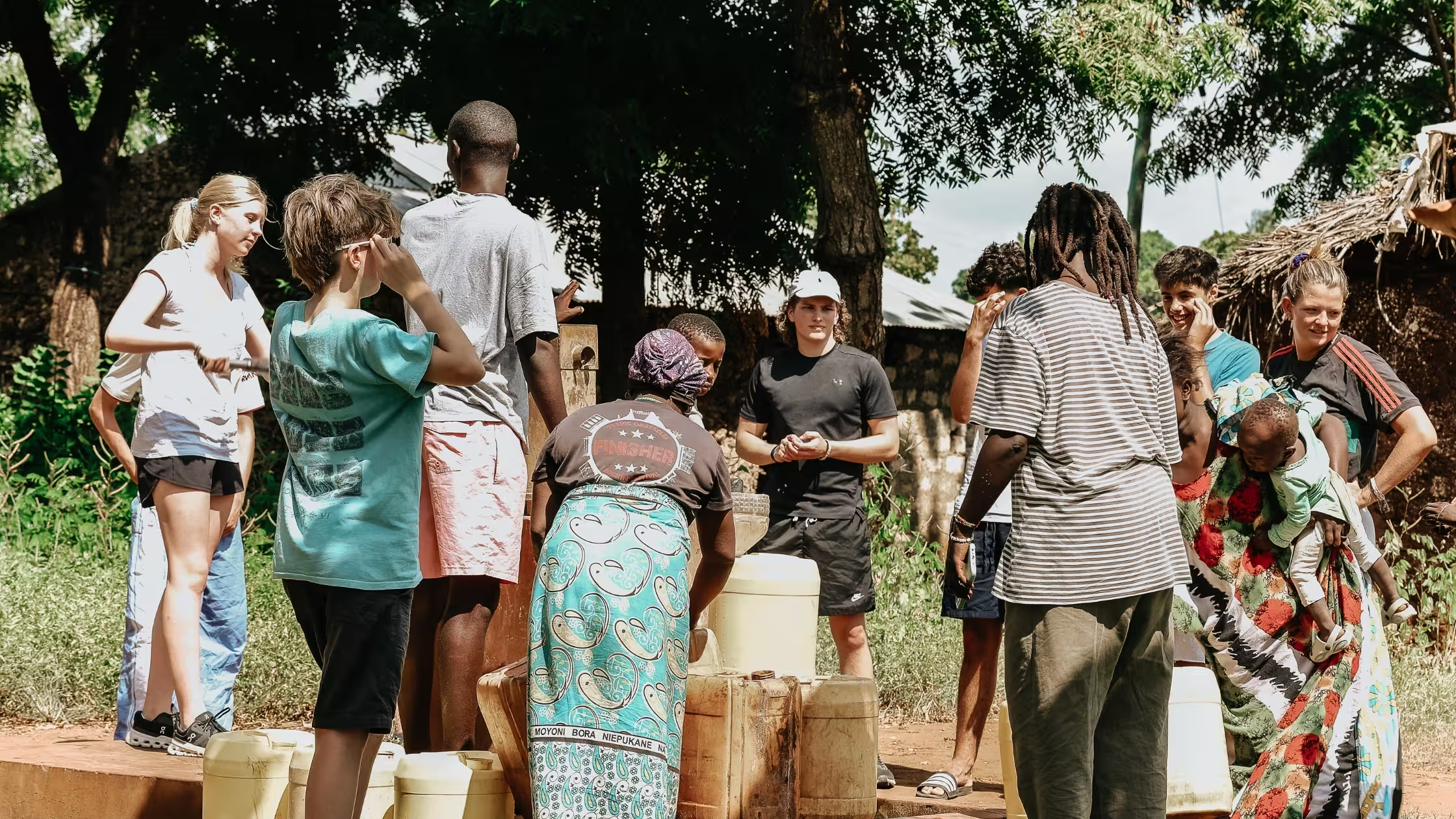
Discover where your Leap belongs on your CV and how to turn project work and team challenges into strong evidence.

Understand when volunteering counts as valuable work experience and how to present your projects, responsibilities and skills accurately.
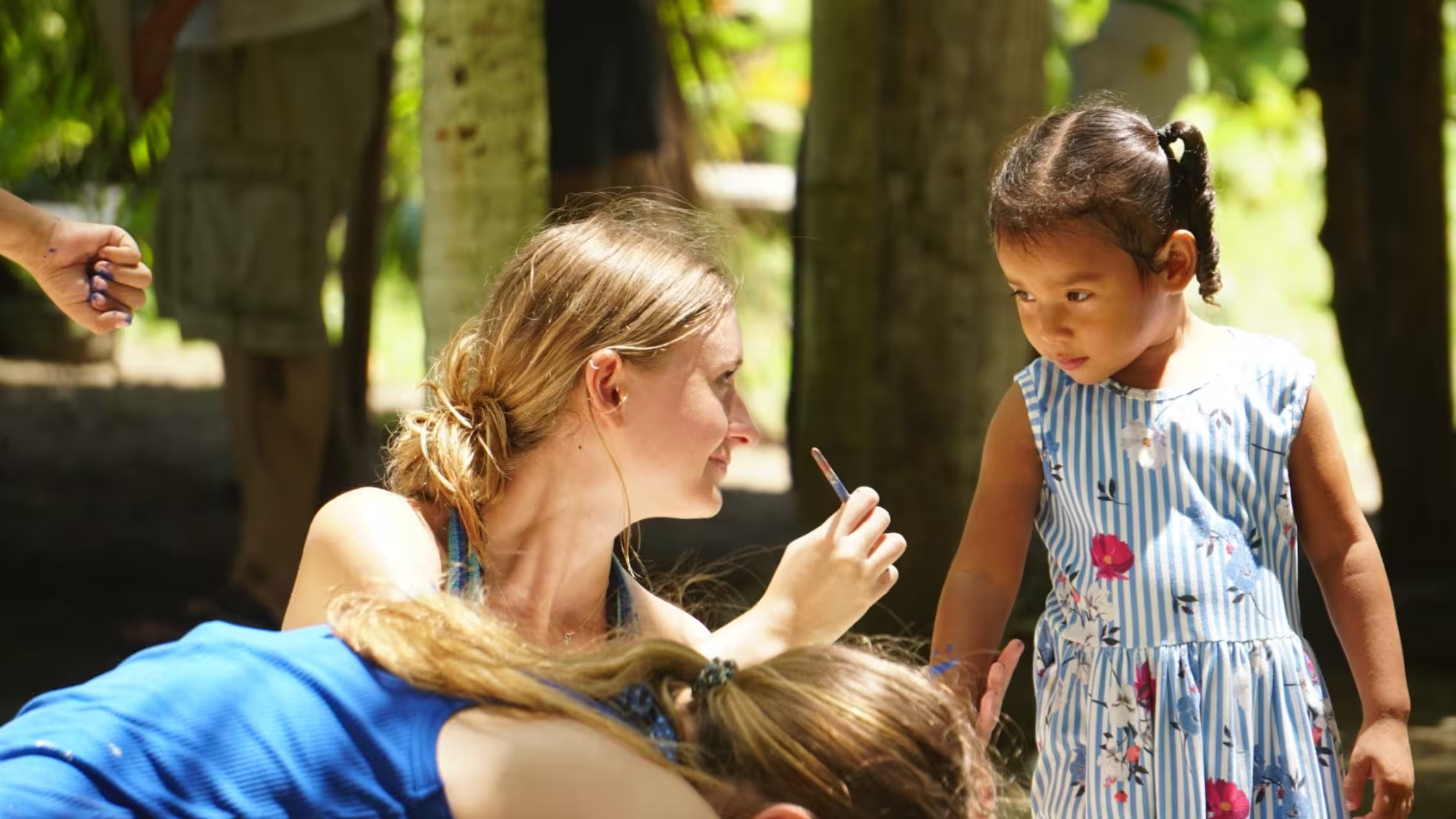
Identify the communication, teamwork, leadership and resilience hidden inside your adventure, and find real moments that prove them.
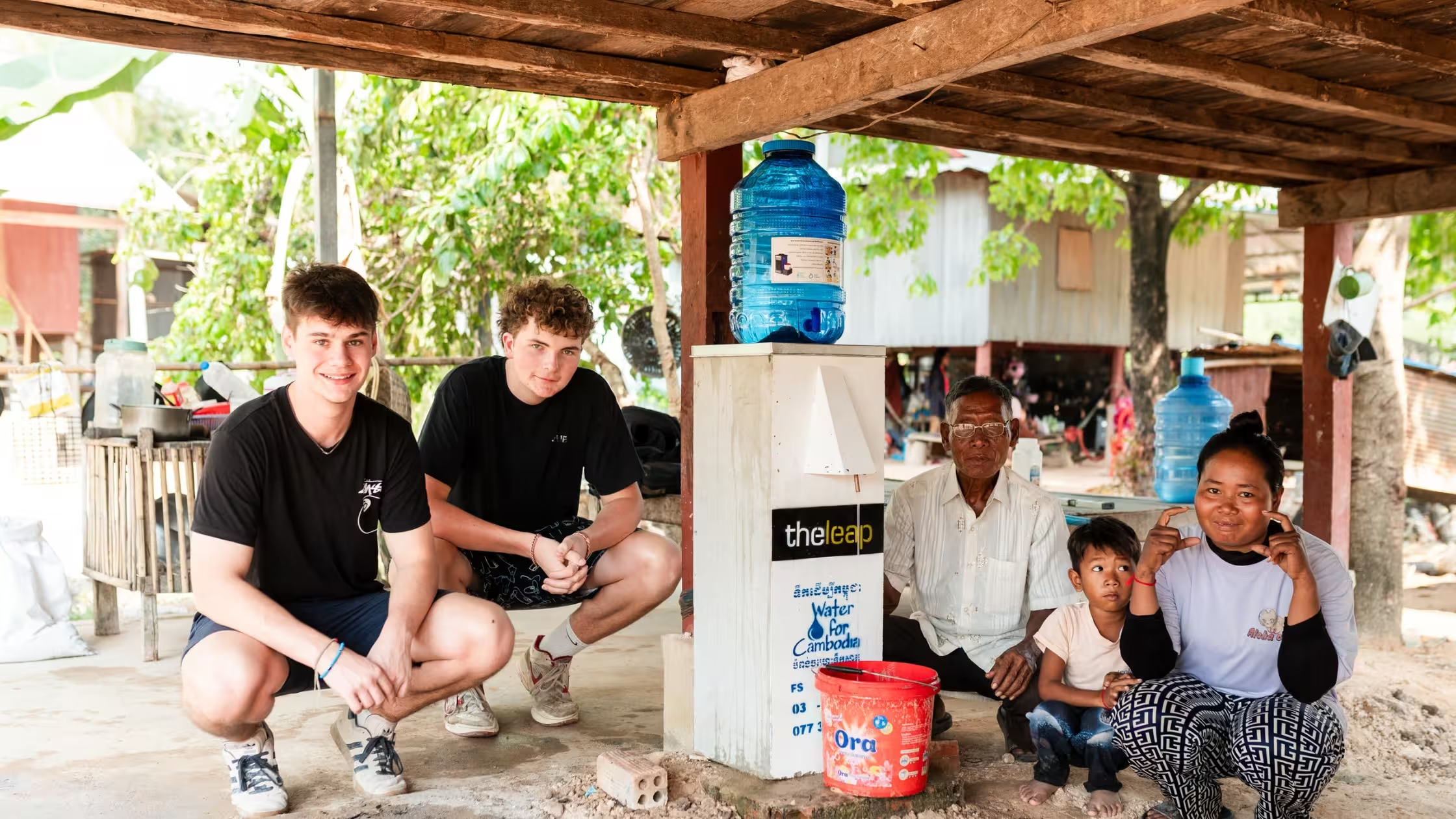
Connect your project experience, personal growth and transferable skills to your chosen course and future university plans.
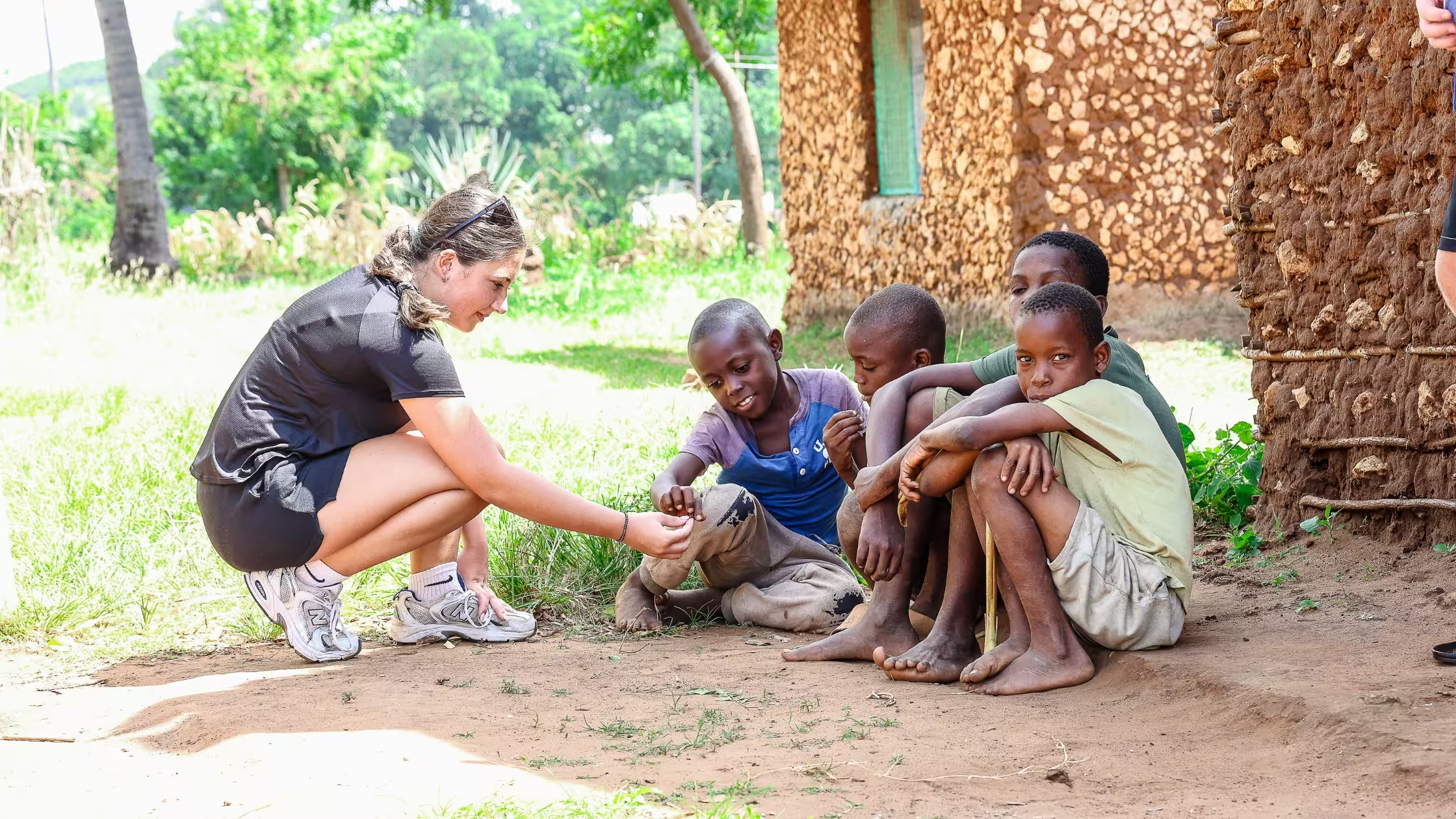
Turn your projects, challenges and team experiences into confident interview answers using the simple STAR technique.
Your strongest evidence is often hidden in the smaller moments — when you stepped forward, adapted to change, supported your team or kept going when things felt difficult.
Capture those stories while they are still fresh and turn them into evidence you can use on your CV, in your UCAS application and during interviews.
Download our free CV/UCAS Gold Workbook to identify your strongest examples and shape them into confident, ready-to-use answers.