.svg)


The short answer is:
Yes. Volunteering abroad can provide valuable work experience.
It may not be paid employment, and you shouldn’t describe it as a job or internship unless that is genuinely what you completed. But if the experience involved real projects, shared responsibilities, specialist guidance, teamwork and practical contribution, it can provide strong evidence for your CV and future applications.
The important question isn’t simply whether you were paid. It is:
No. Volunteering and paid employment are not the same thing.
Employment normally involves a formal role, agreed working conditions and payment. Volunteering involves contributing your time without receiving a wage. But work experience is a much broader term.
It can include:
The National Careers Service includes volunteering among the different ways people can gain work experience. Its CV guidance also recommends including work placements, volunteering and paid employment when describing your previous experience. National Careers Service work-experience guidance
So volunteering is not employment, but it can absolutely provide useful and relevant work experience.
Not all volunteering experiences provide the same level of evidence.
The strongest experiences involve:
Simply attending an activity is not enough.
The value comes from what the experience required from you and how you responded.
A Leap is more than general travel with a few volunteering activities added along the way. Our programmes are built around established relationships with conservation organisations, NGOs, community leaders and social enterprises.
Depending on your programme, you might:
This gives you opportunities to develop and demonstrate the behaviours expected in a workplace.
It is, in many ways:
An employer is unlikely to dismiss an experience simply because it was unpaid.
They want to understand whether you can:
Volunteering can provide evidence of all these qualities.
UCAS also advises that volunteering can be used as work-experience evidence when identifying transferable skills for jobs and apprenticeships. The important part is how you explain what you gained. UCAS transferable-skills guidance
Relevant experience is always useful, but it does not need to match the job exactly. If you are applying for an environmental role, marine conservation or reforestation experience may have a clear connection.
However, the same experience could also support an application for hospitality, retail, business or customer service because it demonstrates:
The project provides the context. The transferable skill makes it relevant.
For example, constructing a fuel-efficient Jiko stove may not directly relate to an office role. But listening to a project briefing, dividing responsibilities, following a process and working towards a shared result are all relevant workplace behaviours.
Depending on your experience and the role, you could include your Leap under:
This is a good option for a structured, project-led programme, particularly if you have limited paid employment.
Use this heading if you want to make the voluntary nature of the experience immediately clear.
This can help communicate that the programme involved more than independent travel.
A useful option if you already have extensive paid or sector-specific employment elsewhere on your CV.
Whatever heading you choose, describe the experience accurately. Do not call yourself an employee, intern, consultant or conservationist unless that genuinely reflects your role.
Start with the programme, destination, duration and date.
For example:
The Leap – International Conservation and Community Programme, Kenya
Four-week volunteer project experience | July 2026
Add a sentence explaining the structure:
Completed a structured team-based programme, working alongside established local partners on practical marine conservation and community projects.
Then include three or four bullet points focused on your contribution:
This presents the experience confidently without pretending it was paid employment.
Went travelling and did some volunteering.
This gives an employer very little useful information.
Completed a four-week conservation and community programme, working alongside established local partners on practical projects and developing teamwork, communication and adaptability.
Worked as a marine conservationist and saved coral reefs in Kenya.
Unless you were employed and professionally qualified as a marine conservationist, this description is misleading.
Worked alongside marine conservation specialists on established coral-restoration activities, following technical guidance and contributing as part of a wider team.
Accurate language is more credible than an inflated job title.
Volunteering can provide valuable experience, but it will not automatically replace every type of work experience.
Some opportunities require:
Your Leap should not be presented as something it wasn’t.
Instead, use it to demonstrate the transferable skills and relevant insights you genuinely gained.
The travel itself is not necessarily the work experience. Focus on the structured projects, responsibilities and team challenges within your Leap.
Use an accurate title such as programme participant or volunteer project participant.
Don’t simply list coral work, reforestation, trekking or community visits. Explain what those activities required from you.
If an output was achieved by the whole group, describe yourself as contributing as part of that team.
You don’t need to dismiss it as “just volunteering”. Unpaid experiences can still require commitment, responsibility and hard work.
Tailor the evidence to the skills requested in each job description.
Before including volunteering as work experience, consider:
If the answer is yes, the experience belongs on your CV.
Your Leap may not have been a conventional job.
But conventional work experience isn’t the only way to prove that you can communicate, collaborate, learn, adapt and take responsibility.
The strongest applications show what you are capable of through specific, credible examples.
Your volunteering experience can provide those examples.
For help writing the complete entry, explore How to Put Your Leap Experience on Your CV.
To identify the evidence underneath the activities, read 8 Transferable Skills Employers Look For — and How Your Leap Builds Them.

Step into a world of ancient temples, vibrant villages, and lush landscapes on our 4-week Cambodia programme. This is your chance to go beyond the tourist hotspots and immerse yourself in the country’s rich history and inspiring community projects.

Swap the ordinary for the extraordinary - explore Costa Rica’s vibrant rainforests, rugged coastlines, and cloud forests while making a real difference. Our 4-week programme blends hands-on conservation work with adrenaline-fuelled adventure, taking you off the beaten track to work with turtles, restore ecosystems, and support local communities.
Your Leap is packed with evidence for CVs,applications and interviews. Explore the complete series and learn how to turnwhat you did, learned and overcame into something that helps you stand out.
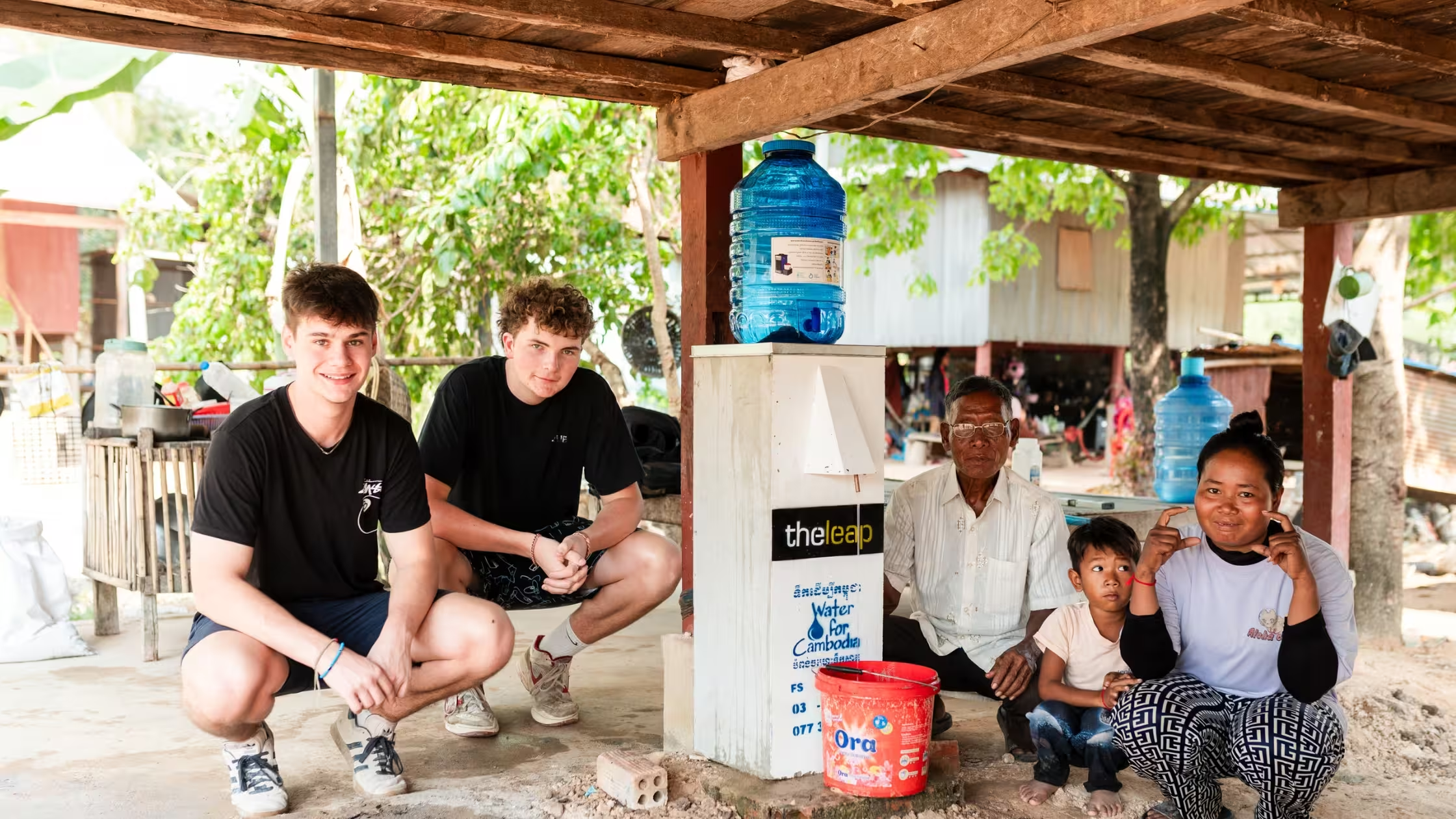
Connect your project experience, personal growth and transferable skills to your chosen course and future university plans.

Understand when volunteering counts as valuable work experience and how to present your projects, responsibilities and skills accurately.

Discover where your Leap belongs on your CV and how to turn project work and team challenges into strong evidence.

Learn how to explain your contribution professionally, credit local expertise and avoid exaggerating the impact of your role.
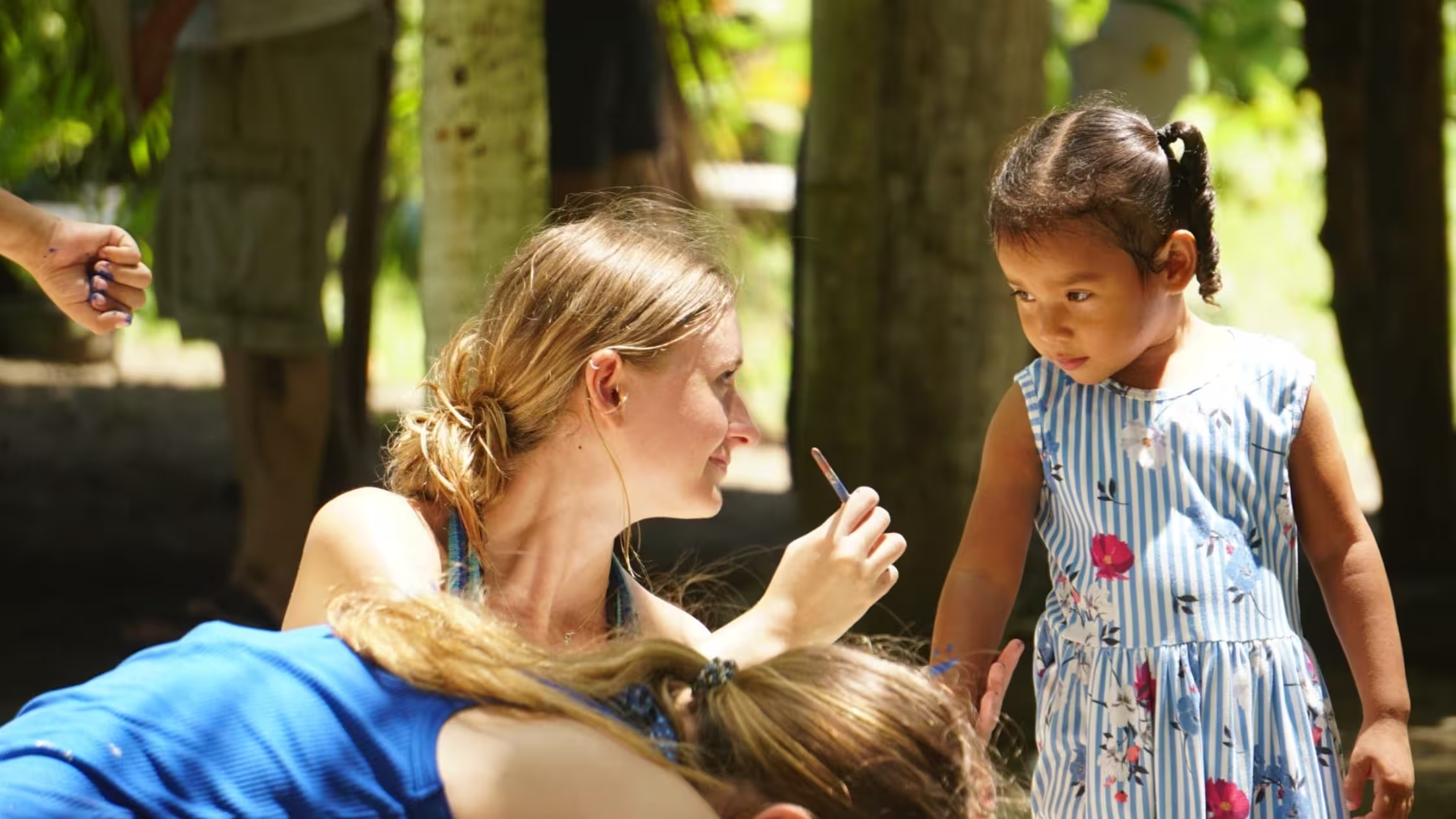
Identify the communication, teamwork, leadership and resilience hidden inside your adventure, and find real moments that prove them.
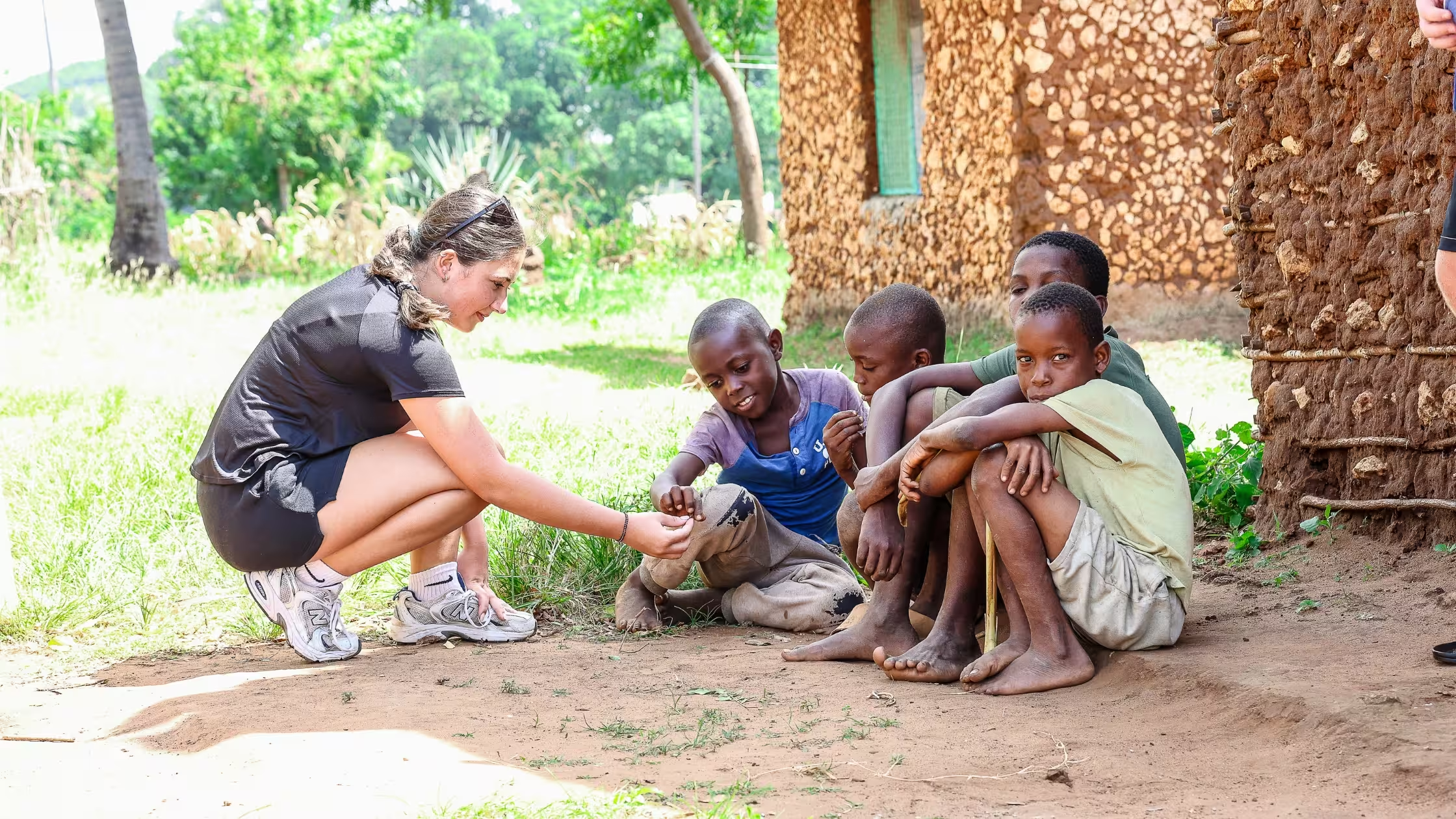
Turn your projects, challenges and team experiences into confident interview answers using the simple STAR technique.
Your strongest evidence is often hidden in the smaller moments — when you stepped forward, adapted to change, supported your team or kept going when things felt difficult.
Capture those stories while they are still fresh and turn them into evidence you can use on your CV, in your UCAS application and during interviews.
Download our free CV/UCAS Gold Workbook to identify your strongest examples and shape them into confident, ready-to-use answers.