.svg)


Let’s start with the blunt bit:
No one is interested in your travels. At least, not on your CV.
“I went travelling on my gap year” tells an employer nothing. It doesn’t tell them what you contributed, what responsibilities you took on or why the experience makes you a stronger candidate.
When applications may be screened digitally before reaching a recruiter, vague statements provide very little useful evidence. Your CV needs to contain clear examples of the skills required for the role.
That is where your Leap becomes particularly valuable.
Your wider gap year may include backpacking, paid work, independent travel and plenty of adventure. Your Leap is the structured part: working alongside established project partners, contributing to practical activities, sharing responsibilities and navigating unfamiliar situations as part of a team.
Here’s how to turn that experience into genuine CV gold.
Anyone can list the places they visited.
Your Leap gives you something far more useful: real examples of how you communicate, collaborate, adapt and respond to challenges.
During your programme, you may have:
These are transferable skills. They matter to employers because they show how you are likely to behave in a real working environment.
The adventure may be what you remember most. The evidence underneath it is what belongs on your CV.
There is no single correct place. Choose the section that best fits your experience and the role you are applying for.
This is often the strongest option because it allows you to present your Leap as a structured, project-led experience rather than simply a holiday.
Use this section if you want to focus specifically on your contribution to conservation or community projects.
This works well if you already have relevant paid employment but want to show the wider skills and perspective gained through your Leap.
Include any relevant qualifications or recognised achievements here, such as the Level 3 International Volunteering Diploma or your Gold Duke of Edinburgh Residential.
Whichever section you choose, include the dates clearly so your Leap helps explain your gap year rather than leaving an unexplained gap.
Start with the programme name, destination, duration and date.
For example:
The Leap – Kenya Conservation and Community Programme
Four-week international programme | July 2026
Follow this with one sentence explaining the overall experience:
Completed a structured team-based programme combining practical conservation and community projects, cultural immersion and adventure challenges.
Then add three or four bullet points showing what you did and the skills involved:
You don’t need to describe every activity. Select the evidence most relevant to the job opportunity.
Don’t assume an employer will make the connection for you. Explain what each activity demonstrates.
What you did and what it can demonstrate
1. Worked on coral, wildlife or reforestation projects
Demonstrates: Teamwork, responsibility and attention to detail
2. Supported a community-led projec
Demonstrates: Communication, cultural awareness and collaboration
3. Lived and travelled with a new team
Demonstrates: Adaptability, compromise and relationship-building
4. Completed a trek or physical challenge
Demonstrates: Resilience, determination and preparation
5. Responded positively to a change of plan
Demonstrates: Flexibility, problem-solving and composure
6. Volunteered for a task or supported a teammate
Demonstrates: Initiative, leadership and responsibility
7. Followed instructions from project specialists
Listening, reliability and willingness to learn
The activity provides the story. The skill makes that story relevant.
Travelled in Kenya and completed some volunteering.
This doesn’t explain the structure of the programme, your contribution or the skills involved.
Completed a four-week conservation and community programme in Kenya, working alongside local project partners on practical marine and sustainability initiatives. Developed communication, teamwork and problem-solving skills while adapting to a new cultural environment.
Developed excellent leadership skills.
This is a claim without any supporting evidence.
Demonstrated initiative by helping organise team tasks, clarifying responsibilities and supporting other participants during practical project activities.
Specific examples are always more credible than impressive-sounding adjectives.
Before sending your CV, read the job description carefully.
What skills does the employer repeatedly mention? Look for words such as:
Communication • Teamwork • Initiative • Reliability • Leadership • Adaptability • Organisation • Problem-solving
Then choose the most relevant parts of your Leap experience.
For a customer-facing role, highlight communicating with different people and growing in confidence.
For a team-based position, focus on collaboration, shared responsibility and reliability.
For a practical role, emphasise following instructions, solving problems and your willingness to get stuck in.
For a leadership opportunity, use an example of when you stepped forward, organised a task or supported someone else.
You can use language from the job description when it accurately reflects your experience. This makes the relevance clearer to recruiters and digital screening systems.
However, don’t cram your CV with keywords or claim skills you cannot support with a real example.
Be confident about your experience, but don’t exaggerate your impact.
Your Leap involved working alongside established organisations and local experts who understand the needs of their communities and environments.
Use phrases such as:
Avoid suggesting that you single-handedly transformed a project or “saved” a community during a short programme.
Honest, specific language shows maturity, perspective and respect.
Employers do not need a list of every country, beach, hostel or landmark you visited.
Your Leap was a structured experience involving projects, teamwork and shared responsibilities. Give those elements the prominence they deserve.
Don’t simply say you are resilient or a good communicator. Include a brief example showing how you demonstrated that skill.
Three or four strong, relevant bullet points are more effective than a long description of everything you did.
Different roles require different evidence. Adjust your Leap bullet points to highlight the most relevant skills for each opportunity.
The strongest examples often come from smaller moments rather than the headline activities.
Write down:
These stories will help you create stronger CV statements and prepare more convincing interview answers.
Your Leap may have felt like adventure, friendship, cultural immersion and an unforgettable start to your gap year.
But beneath the adventure, you were learning how to communicate, collaborate, adapt, solve problems and take responsibility in the real world.
That is the part employers need to see.

From the savannahs of the Maasai Mara to the turquoise waters of the Indian Ocean, Kenya is a land of breathtaking beauty, rich culture, and impactful conservation work. Our 4-week programme combines wildlife conservation, community engagement, and adventure, giving you the chance to experience Kenya in a way that few travellers do.

Step into a world of ancient temples, vibrant villages, and lush landscapes on our 4-week Cambodia programme. This is your chance to go beyond the tourist hotspots and immerse yourself in the country’s rich history and inspiring community projects.
Your Leap is packed with evidence for CVs,applications and interviews. Explore the complete series and learn how to turnwhat you did, learned and overcame into something that helps you stand out.

Learn how to explain your contribution professionally, credit local expertise and avoid exaggerating the impact of your role.

Discover where your Leap belongs on your CV and how to turn project work and team challenges into strong evidence.
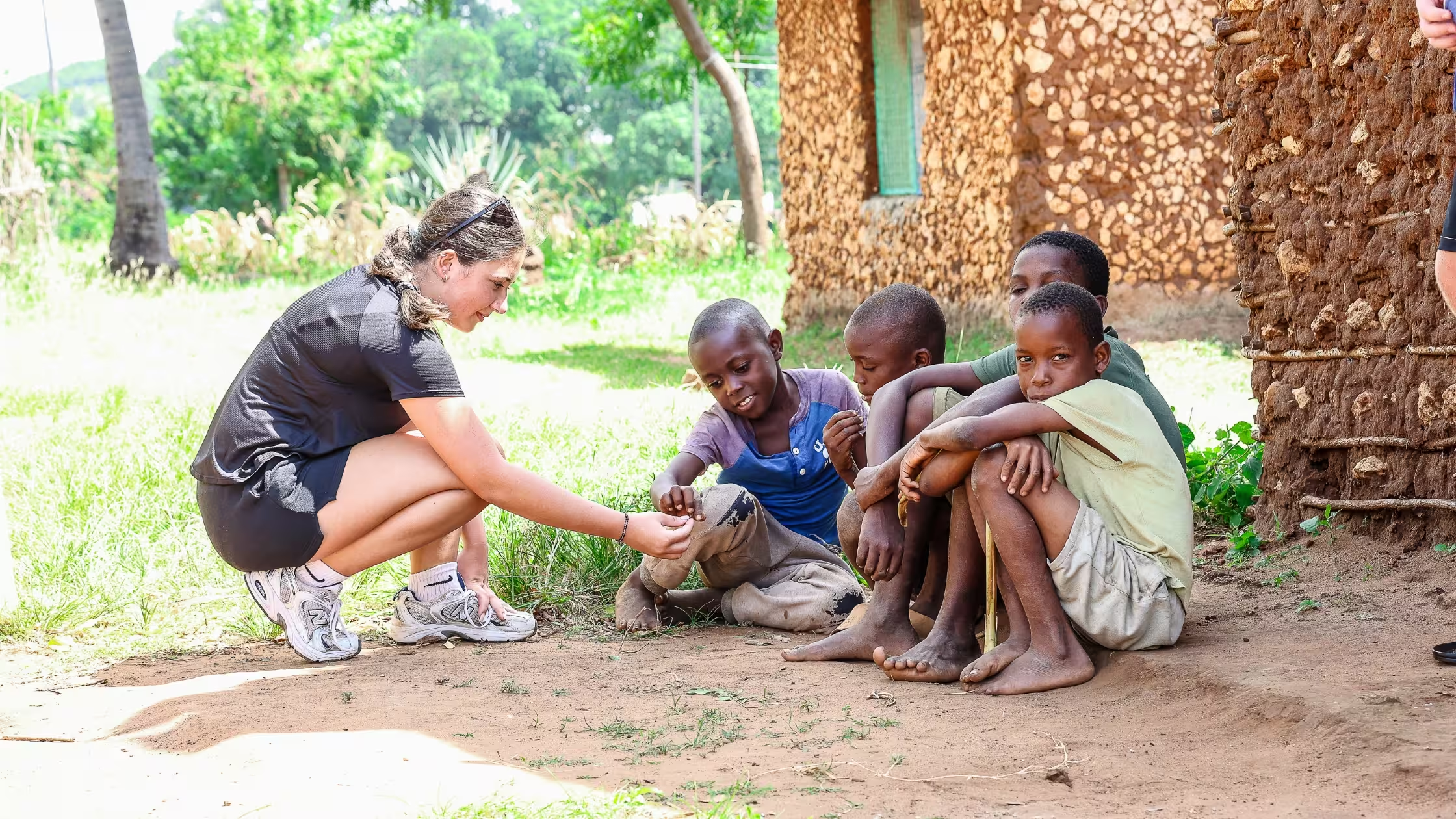
Turn your projects, challenges and team experiences into confident interview answers using the simple STAR technique.

Understand when volunteering counts as valuable work experience and how to present your projects, responsibilities and skills accurately.
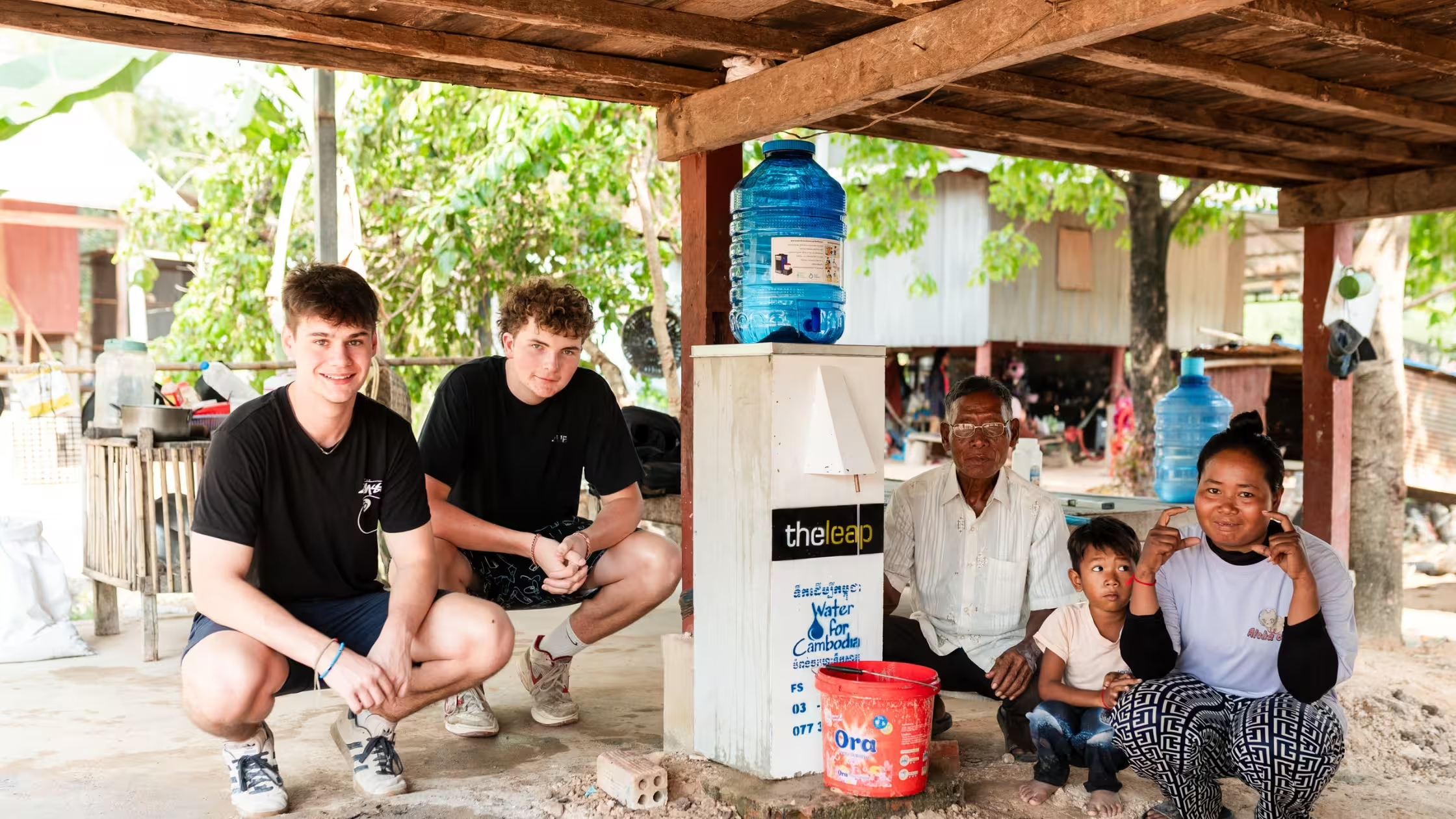
Connect your project experience, personal growth and transferable skills to your chosen course and future university plans.

Identify the communication, teamwork, leadership and resilience hidden inside your adventure, and find real moments that prove them.
Your strongest evidence is often hidden in the smaller moments — when you stepped forward, adapted to change, supported your team or kept going when things felt difficult.
Capture those stories while they are still fresh and turn them into evidence you can use on your CV, in your UCAS application and during interviews.
Download our free CV/UCAS Gold Workbook to identify your strongest examples and shape them into confident, ready-to-use answers.